Author: Luna Miller

  • My Journey with Probiotic Drinks: Finding What Works for Our Family

    My Journey with Probiotic Drinks: Finding What Works for Our Family

    Oh my goodness, probiotic drinks! When I first started looking into ways to boost our family’s gut health, I felt totally swamped. There are so many options out there, right? As a mom trying to keep everyone’s tummies happy, I just wanted something simple and effective. It felt like I needed a science degree just to pick one out! So, I dove in, and now I want to share what I’ve learned about these amazing fermented beverages to help you find one that suits your lifestyle.

    Let’s Get Real About Different Probiotic Drinks and How They Help Our Guts

    Alright, so there are basically three big families of probiotic drinks I’ve found. Each brings its own unique crew of tiny helpers to the party.

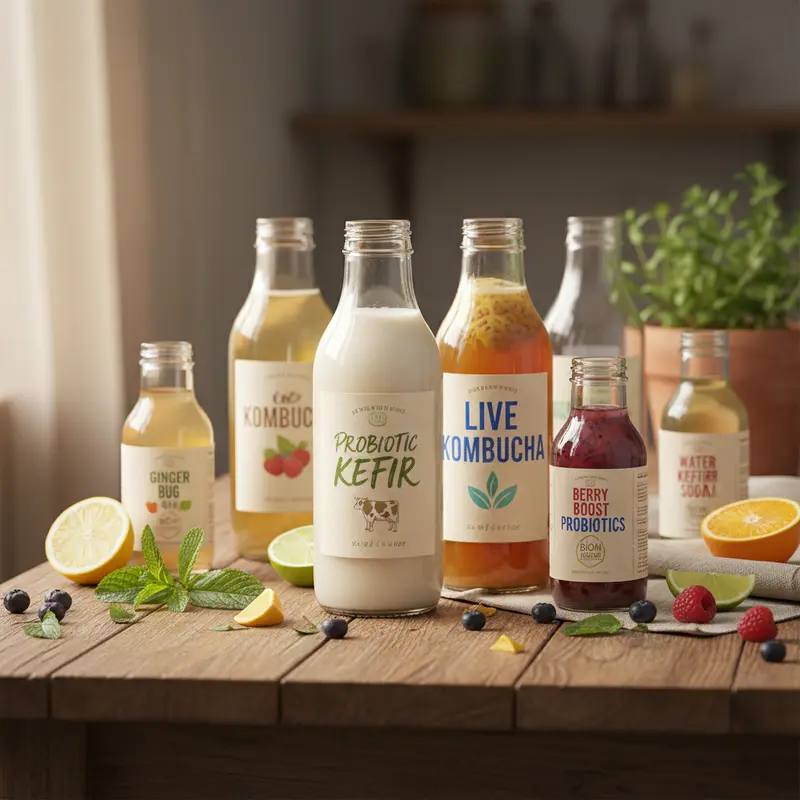
    Various dairy-based probiotic drinks including kefir and yogurt drinks

    First, you’ve got the dairy-based ones, like creamy kefir and those yummy yogurt drinks. These often have fancy names like Lactobacillus and Bifidobacterium on the label. Essentially, they’re little superheroes for our digestion, and they can even help if lactose sometimes gives you trouble. They also give your immune system a nice boost!

    Then there are the non-dairy fermented options. Think water kefir or even some fermented veggie juices. These guys bring a whole diverse crew of microbes to the party, which is great for building a rich and varied gut garden. They often feature strains like Leuconostoc, which are known for their anti-inflammatory perks.

    And finally, kombucha! It’s that bubbly, slightly sour fermented tea. Kombucha contains microbes from its SCOBY, like Gluconacetobacter and Saccharomyces yeasts. These can promote detoxification (in a gentle, everyday way, not a “harsh cleanse” kind of way!) and offer some lovely antioxidants.

    Now, you might hear about specific strains doing specific things. For instance, Lactobacillus rhamnosus GG (I just call them ‘the good guys!’) from dairy kefir helps strengthen our gut lining. Meanwhile, Leuconostoc mesenteroides in water kefir can actually fight off bad bugs. The amount of these good guys can vary quite a bit, too. Dairy-based drinks often pack a huge punch – sometimes 100 times more than kombucha, which is usually a bit lighter. It’s like comparing a big, cozy hug to a gentle high-five! Plus, how a drink is made matters. Dairy bases provide a creamy texture and help the probiotics survive their journey through your tummy better compared to more acidic non-dairy options.

    However, let’s be real, not every probiotic drink works for everyone. If dairy and your tummy don’t quite get along, those dairy-based options might trigger discomfort. Kombucha’s acidity and trace alcohol content may not suit all consumers, especially those with sensitive tummies. Non-dairy fermented drinks are generally hypoallergenic, but their taste can really swing from one extreme to another – a bit like trying new recipes, right?

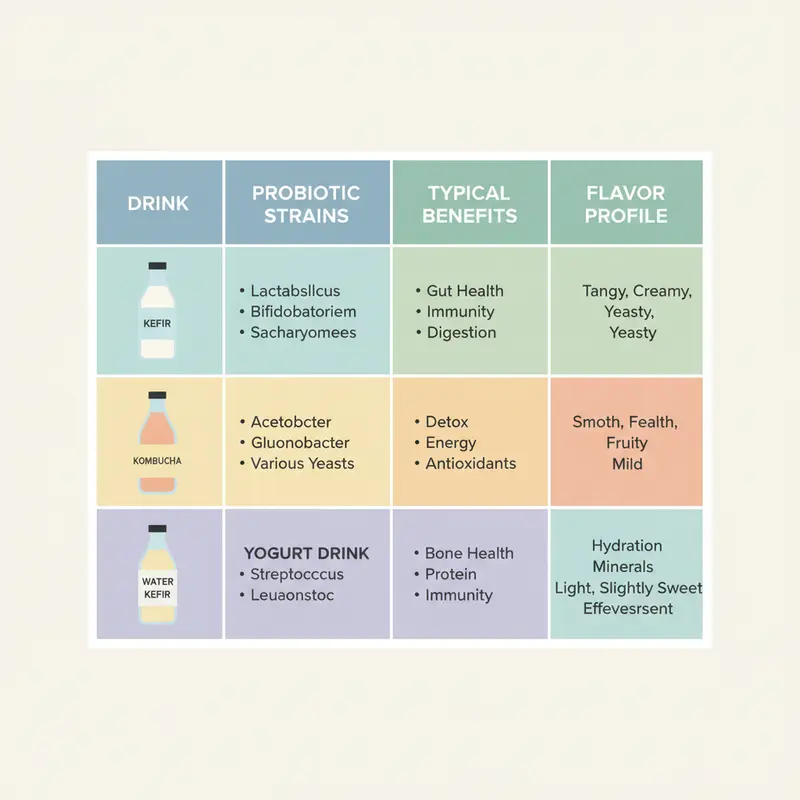
    A Little Snapshot: Common Probiotic Drinks and What Makes Them Tick

    Table showing probiotic drink types, strains, benefits, and flavors

    Drink TypeCommon Probiotic StrainsTypical BenefitsFlavor Profile
    KefirLactobacillus, BifidobacteriumImproves digestion, boosts immunityTangy, creamy
    KombuchaS. cerevisiae, AcetobacterDetoxification, antioxidant propertiesSour, slightly sweet
    Yogurt DrinksLactobacillus bulgaricus, Streptococcus thermophilusSupports gut health, enhances lactose digestionCreamy, mild
    Water KefirLactobacillus, LeuconostocHydrating, gut flora balanceLight, slightly sweet

    Understanding these differences helps us make smart choices that fit our individual health goals and any dietary restrictions we might have. Picking a probiotic drink isn’t just about grabbing any old bottle; it’s about finding the right fit for your body!

    My Go-To Tips When Choosing a Probiotic Drink

    Checklist of tips for selecting probiotic drinks

    When I’m standing in the grocery aisle, feeling overwhelmed by all the colorful labels, these are the little reminders I keep in my back pocket when choosing a new probiotic drink for our family:

    Look for diverse strains: A variety of probiotic strains is like having a well-rounded team!
    Check the CFU count: This tells you how many living good guys are in there. More isn’t always better, but it’s good to know.
    Be mindful of added sugars and calories: Some can be sneaky!
    Scan for certified health claims: If it makes a big promise, check if it’s backed up by anything real.

    Conclusion

    So, choosing the “best” probiotic drink really boils down to what works for you and your body. Don’t feel like you need to become a gut guru overnight! Just listen to your gut (literally!), pay attention to what makes you feel good, and know that even small steps towards a happier tummy can make a big difference. Whether it’s a creamy kefir, a zesty kombucha, or a refreshing water kefir, finding your happy fermented beverage can be a fun journey to better digestive wellness.
  • Making Mealtime Magic: My Journey with Gut-Friendly Meals for Happy Bellies

    Making Mealtime Magic: My Journey with Gut-Friendly Meals for Happy Bellies

    Oh, trust me, I’ve been there. You know those days when your tummy just feels… off? For families like ours, especially when someone is managing digestive conditions like Crohn’s or ulcerative colitis, finding the right gut-friendly meals isn’t just a preference—it’s a game-changer. These aren’t just special recipes; they’re our secret weapon, packed with the good stuff our bodies need to feel better, heal, and truly enjoy life.

    I’m just a mom in Portland, navigating the kitchen chaos and learning about gut health right alongside you. This article is all about what we’ve discovered: simple, natural, nutrient-packed foods that are kind to the stomach and truly support our overall well-being. Let’s dive into some easy meal ideas that can make a real difference for sensitive tummies.

    Table of Contents

    Finding Our Flow: Tailored Gut-Friendly Meals for Specific Digestive Needs

    Tailored gut-friendly meal ingredients

    When digestive conditions like Crohn’s disease or ulcerative colitis become part of your daily life, generic food advice just doesn’t cut it. We quickly learned that managing those uncomfortable symptoms—think abdominal pain, sudden bathroom dashes, or feeling like you’re just not absorbing enough nutrients—means getting really smart about our gut-friendly meal plans. It’s all about making choices that truly minimize symptoms and help our insides heal.

    For someone dealing with Crohn’s, for example, we focus on ingredients that are easy on the gut and help calm inflammation. That means lean proteins, gentle cooked veggies like carrots and zucchini, some plain rice, and often, we’ll add in some probiotics to keep those good gut bugs happy. We also make sure there’s enough protein and calories to prevent feeling rundown. Ulcerative colitis calls for similar kindness to the tummy, but we might lean even more heavily on reducing fiber during a flare-up. Think peeled fruits, smooth nut butters, and more refined grains to avoid irritating things further.

    Our kitchen has become a bit of a science lab, really! We’ve learned to spot common irritants like super fatty foods, too much coffee, or certain dairy products. Instead, we fill our plates with nutrient powerhouses: foods rich in omega-3s, vitamins D and B12, and soluble fibers. And don’t worry, there’s always room for flexibility! We often swap in lactose-free dairy or plant-based proteins, because keeping things tasty and varied is key to sticking with it.

    One of the biggest lessons for us was around how we eat, not just what. Smaller, more frequent meals are a total lifesaver. It’s like giving your digestive system smaller, easier tasks instead of one big, overwhelming job. We try to aim for 4-6 mini-meals throughout the day, always pairing carbs with protein. It helps keep blood sugar steady and gives the gut a chance to do its healing work.

    It might sound intense, but honestly, we’ve seen such a difference. Doctors and nutritionists often talk about this, and families like ours confirm it: when we personalize our meal plans, we just feel better. It takes the stress out of eating and turns our food into a powerful tool for feeling good again.

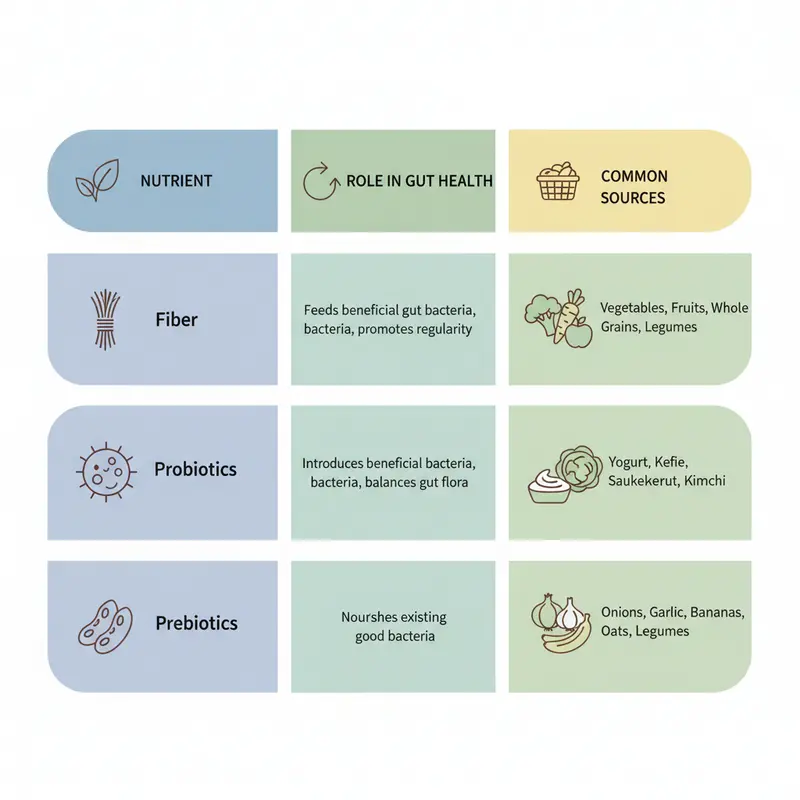
    Table of key nutrients for gut health

    What We’ve Learned: Key Nutrients for a Happy Gut

    Here’s a little peek at some of the superstars we try to include in our stomach-friendly foods:

    Nutrient Role in Gut Health Common Sources
    Fiber Promotes healthy bowel movements Vegetables, whole grains, legumes
    Probiotics Supports beneficial gut bacteria Yogurt, fermented foods

    Our Little Cheat Sheet for Creating Gut-Friendly Meal Plans

    We use this as a quick reminder when planning our meals:

    • Include low-FODMAP ingredients (if that’s right for you!)
    • Avoid processed and high-sugar foods
    • Incorporate soluble fiber-rich foods

    Working with our doctors and a registered dietitian has been amazing. They’ve helped us blend our family’s preferences with solid, science-backed advice. Embracing these personalized gut-friendly meal plans has truly shifted how we manage everything. It’s transformed mealtimes from a source of stress into an empowering way to find relief and restore our family’s well-being. It’s all about taking small steps, not chasing perfection!

    Frequently Asked Questions (FAQ)

    Gut-friendly meal examples for sensitive stomachs

    I know you probably have questions, because I sure did when we started this journey! Here are some common ones that pop up:

    Q1: What is the 7 day gut reset?
    Oh, the 7-day gut reset! Think of it like a little mini-vacation for your insides. It’s a short-term plan focused on really loading up on gut-friendly meals—lots of fiber, probiotics, and foods that help calm inflammation. The idea is to hit the reset button, help your gut find its balance, and hopefully, dial down those uncomfortable digestive symptoms.

    Q2: What meals to eat on a gut cleanse?
    When we’re doing a little cleanse or reset, we focus on super gentle, tummy-friendly foods. This often means cooked vegetables, lean proteins, fruits that are easy to digest (like peeled apples or bananas), and those wonderful fermented foods that feed our healthy gut bacteria.

    Q3: What food is good for gut problems?
    For me, and for anyone with a sensitive tummy, the best foods are rich in soluble fiber (think oats or carrots), full of probiotics (like yogurt or sauerkraut), and packed with omega-3 fatty acids (salmon is a favorite!). We also try to keep processed sugars and anything that might be an irritant to a minimum. It’s all about supporting that delicate balance!

    Q4: What meals are gentle on the stomach?
    When my kids are feeling a bit off, or I need something really comforting and gentle, we stick to things like white rice, steamed veggies, peeled fruits, and maybe some lactose-free dairy. These are easy-to-digest ingredients that support the stomach without causing extra work.

  • Gut-Healthy Dinners: Key Ingredients & Nutrients for Digestive Wellness

    Gut-Healthy Dinners: Key Ingredients & Nutrients for Digestive Wellness

    You know those evenings? After a long day, when everyone’s hungry and you just want to get a good meal on the table? Lately, I’ve been focusing on making those meals work for us, not just fill us up. It all started when I realized how much our tummies – and our overall energy – depended on what we ate. Trust me, it’s not about perfection! But focusing on gut-healthy dinners has been a game-changer for my family and me. These aren’t just meals; they’re little acts of kindness for our insides, helping us feel better, from boosting our immunity to just feeling more ‘on’ every day. So, grab a cup of coffee (or wine, no judgment!), because I want to share some of the easy ingredients and nutrients I’ve discovered for crafting truly gut-friendly meals.


    Foundations of Gut-Healthy Dinners: Key Ingredients and Nutrients

    Okay, so what actually makes a dinner ‘gut-healthy’? When I first started looking into this, it felt a little overwhelming, but let me break it down like I learned it. Think of our gut like a bustling garden. For it to really thrive, it needs specific ‘food’ – nutrients that keep all those tiny workers happy and balanced. I’ve found it boils down to four main categories: dietary fiber, prebiotics, probiotics, and polyphenols. Each one plays a super important role in keeping our digestion smooth and us feeling good.
    First up, there’s dietary fiber. This stuff is magic! It keeps things moving (if you know what I mean!) and acts like a delicious meal for our good gut bugs. Then we have prebiotics. These are special fibers, kind of like the VIP food for our beneficial bacteria. You’ll find them in everyday foods like garlic and onions. They essentially tell the good bugs, ‘Grow, grow, grow!’ And speaking of good bugs, probiotics are the actual live, friendly bacteria themselves. We often get these from fermented foods, like the tangy kimchi I sometimes try to sneak into the kids’ meals (wish me luck!). They literally add more good guys to our gut team. Finally, polyphenols are those vibrant antioxidants found in colorful fruits and veggies. They don’t just protect our cells; they also help keep our microbial balance just right.

    So, where do we find these amazing gut helpers? I load up on things like beans, lentils, whole grains, and, yes, plenty of garlic and onions. Fermented goodies like yogurt or a bit of kimchi are great, too. And don’t forget those beautiful berries and leafy greens! I also try to grab organic when I can. It just feels better knowing we’re reducing extra chemicals, which definitely helps keep our gut happy. Mixing and matching these ingredients ensures our gut garden gets a wide variety of what it needs to really flourish.

    Honestly, the more I learn, the more I see how important these ingredients are. Even simple things like adding more berries can make a difference! My goal isn’t to be perfect, but to consistently build meals with these gut-friendly stars. It’s like creating a really solid foundation for our overall health, one delicious dinner at a time.

    Table with gut-healthy ingredients and nutritional roles

    Key Gut-Healthy Ingredients and Their Nutritional Roles
    To make it a bit easier, here’s a quick peek at some ingredients I often reach for when planning our gut-healthy dinners, and what makes them so special. It’s not about being super strict, just knowing what little helpers are out there!

    IngredientNutritional RoleExample Sources
    Chicory rootPrebiotic fiber that feeds beneficial gut bacteriaChicory root coffee, inulin supplements
    KimchiProbiotic fermented food improving gut floraKimchi jars, fermented vegetable mixes
    SalmonRich in omega-3 fatty acids reducing gut inflammationFresh or canned salmon

    And if you’re like me, sometimes a simple checklist helps when I’m staring into the fridge, wondering what to make. Here’s a little guide I use to make sure I’m hitting the main notes for our healthy gut meals:

    Checklist of gut-healthy dinner components

    Checklist for Building Gut-Healthy Dinners

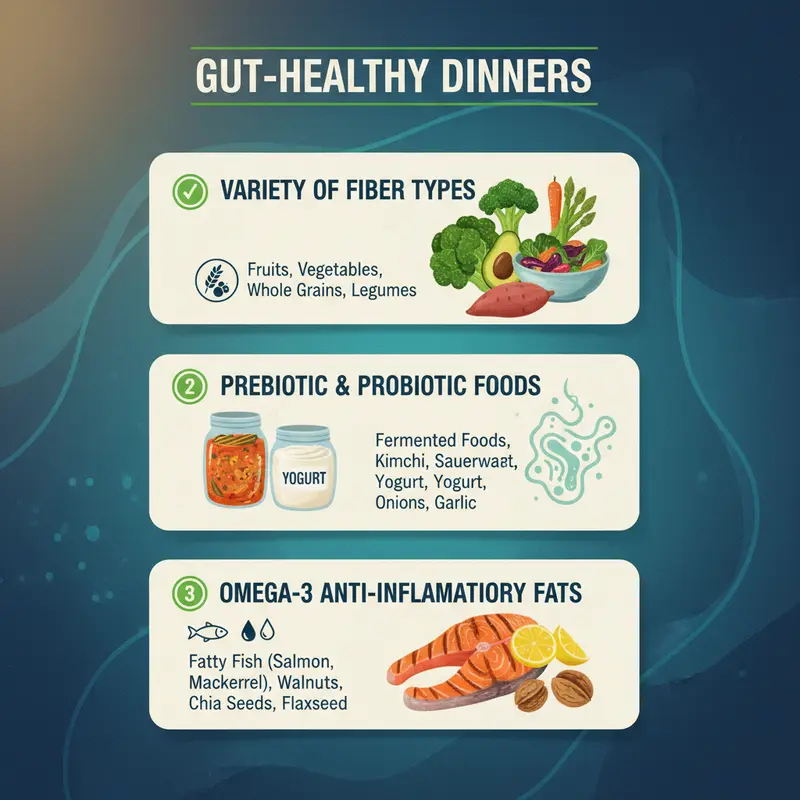
    – Include a variety of fiber types – Incorporate both prebiotic and probiotic foods – Choose anti-inflammatory fats such as omega-3s


    So there you have it! Crafting gut-healthy dinners doesn’t have to be complicated or scary. For me, it’s all about those foundational ingredients: fiber, prebiotics, probiotics, and polyphenols. By simply focusing on nutrient-rich foods, and choosing organic when it feels right, we can whip up really tasty meals that truly support our tummies. It’s a gentle way to boost our digestive wellness and just feel more vibrant every day. Remember, every little step counts, and enjoying your food is a huge part of it!

    FAQ

    Alright, sometimes you just have quick questions, right? Here are some common ones I hear (or ask myself!) about making our dinners more gut-friendly:
    Q1: What is the best dinner for gut health? A1: The best dinners for gut health combine high-fiber foods, prebiotics (like garlic and onions), probiotics (such as yogurt or kimchi), and anti-inflammatory ingredients like omega-3-rich fish. These support microbial diversity and digestive function.

    Q2: What is the healthiest food for gut health? A2: Foods rich in dietary fiber, fermented probiotics, and polyphenols are healthiest for the gut. Examples include legumes, fermented vegetables, berries, and leafy greens.

    Q3: What are the 5 R’s of gut health? A3: The 5 R’s include Remove, Replace, Reinoculate, Repair, and Rebalance — steps used in gut healing protocols to restore digestive health.

    Q4: What to eat for dinner with digestive issues? A4: For digestive issues, dinners should focus on easily digestible fiber, fermented foods for probiotics, and anti-inflammatory ingredients while avoiding irritants like processed foods and high-fat meals.

  • Top 6 Superfoods for a Gut-Healthy Lunch: Benefits and Easy Incorporation Tips

    Top 6 Superfoods for a Gut-Healthy Lunch: Benefits and Easy Incorporation Tips

    Let’s be real, lunchtime can be a bit of a chaotic whirlwind, especially when you’re a busy mom like me! For the longest time, I’d just grab whatever was quick, then hit that dreaded afternoon slump. But after diving into the world of gut health – mostly because my own tummy wasn’t feeling so happy – I realized how much a simple, gut-healthy lunch truly matters. It’s not just about digestion; it’s about feeling energized, keeping that gut microbiome balanced, and generally feeling awesome. Trust me, making small changes to what we eat at midday, especially by adding some incredible superfoods rich in fiber, probiotics, and those good-for-you polyphenols, can make a huge difference in our overall gut wellness. So, I’m excited to share six of my absolute favorite superfoods that are total game-changers for a happy gut, along with my easy-peasy tips for tossing them into your next midday meal.


    Table of Contents

    • Top 6 Superfoods for a Gut-Healthy Lunch and Their Nutritional Benefits

    Top 6 Superfoods for a Gut-Healthy Lunch and Their Nutritional Benefits

    I used to think “gut health” meant some super complicated diet, but honestly, it just comes down to making smart, tasty choices! A gut-healthy lunch truly helps keep everything running smoothly – from digestion to a happy microbiome, which is basically our body’s little inner garden. When we focus on foods packed with fiber, probiotics, and those wonderful polyphenols, we give our bellies a real boost. So, I’ve rounded up six amazing superfoods that have been total superstars for my family’s digestive health, and I’ll walk you through why they’re so great and how easy it is to add them to your plates.
    Now, let’s get into the good stuff!
    Kimchi in a bowl with chopsticks
    1. Kimchi

    • Nutrients: Probiotics, vitamins A, C, K
    • Benefits: Oh, kimchi! This spicy fermented cabbage is a gut powerhouse. It’s loaded with good-for-you probiotics that help keep your gut flora happy and humming. Plus, it just boosts our immune system, which is a big win for this mom! The fermentation also makes all those nutrients easier for our bodies to soak up.
    • Lunch Tip: I love tossing a spoonful into my grain bowls for a zesty, tangy kick, or just serving it as a colorful side dish. So easy!

    Salad sprinkled with chia seeds
    2. Chia Seeds

    • Nutrients: Soluble fiber, omega-3 fatty acids, antioxidants
    • Benefits: These tiny seeds are mighty! They’re full of soluble fiber, which really helps things move along smoothly and keeps us feeling regular. And those omega-3s? They’re like little soothing agents, helping to calm any inflammation in our guts.
    • Lunch Tip: I often sprinkle them right over my salads for a little crunch, or blend them into my kids’ smoothies (they never even notice!).
    1. Jerusalem Artichoke
    • Nutrients: Inulin (prebiotic fiber), vitamin C
    • Benefits: Don’t let the name fool you, these aren’t actually artichokes! But they are fantastic for our gut. They’re packed with inulin, a prebiotic fiber that essentially feeds all the good bacteria in our bellies, helping our colon stay healthy and even absorb minerals better.
    • Lunch Tip: Roasting them brings out a lovely nutty flavor, making them a delicious side. You can also puree them into a creamy, healthy dip!
    1. Greek Yogurt
    • Nutrients: Probiotics, protein, calcium
    • Benefits: Ah, Greek yogurt – a classic for a reason! It’s brimming with probiotics that help bring balance back to our gut microbiome. Plus, the protein content is a real bonus, supporting the repair of our gut lining. It’s a win-win!
    • Lunch Tip: I love using it as a creamy base for salad dressings, or just enjoying a plain bowl with some fresh fruit for a simple gut-friendly lunch.
    1. Blueberries
    • Nutrients: Polyphenols, fiber, vitamins C and K
    • Benefits: These little purple gems are more than just tasty! They contain polyphenols that work wonders for our gut bacteria, helping to keep things calm and reduce inflammation. Plus, they’re a good source of fiber!
    • Lunch Tip: My go-to is tossing a handful into salads for a burst of sweetness and color, or using them to top my grain bowls.
    1. Almonds
    • Nutrients: Fiber, healthy fats, vitamin E
    • Benefits: Almonds aren’t just for snacking! They offer a nice dose of fiber, which helps keep us regular, and those healthy fats are fantastic for dialing down inflammation in the gut.
    • Lunch Tip: I often chop them up and sprinkle them over salads, or add them to my Greek yogurt for extra crunch and nutrients.

    Considerations: Now, a quick heads-up from one mom to another:

    • While fermented foods like kimchi and Greek yogurt are awesome, some folks (like my friend Sarah!) might find them tricky if they have histamine intolerance. Listen to your body!
    • If you’re new to high-fiber foods, it’s totally okay to start slow. We want to avoid any uncomfortable bloating, right? Gradual steps are key.
    • And of course, always be mindful of allergies, especially nuts. Safety first!

    Colorful gut-healthy lunch bowl with superfoods
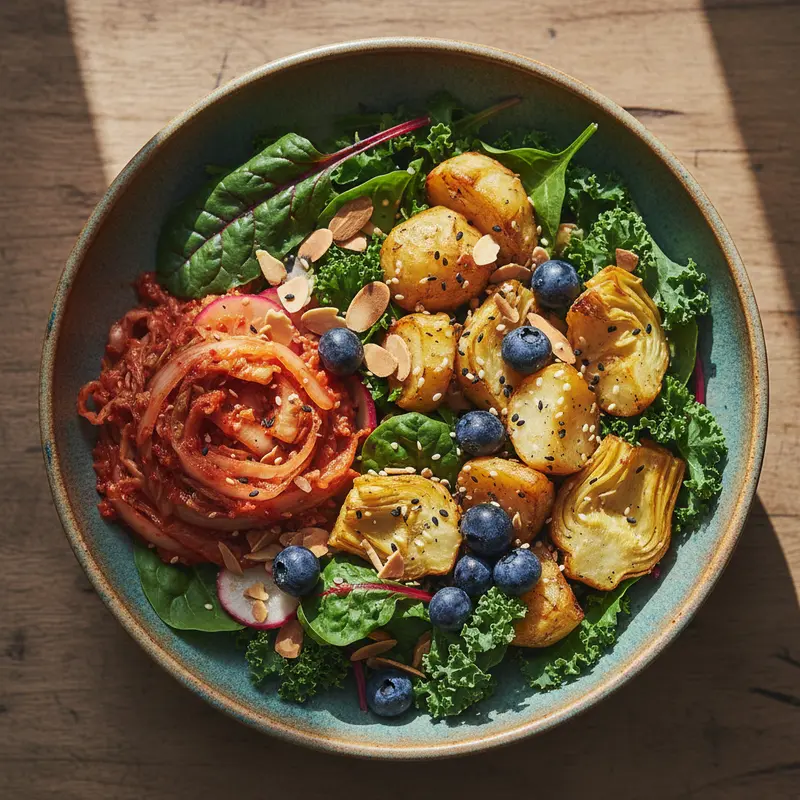
    Incorporation Overview: See? These superfoods are actually super easy to weave into your day! For a fantastic gut-healthy lunch, imagine this: a big bowl of leafy greens, topped with some roasted Jerusalem artichokes, a dollop of kimchi, a sprinkle of almonds, and a handful of blueberries. Yum! If you’re craving something creamy, just blend Greek yogurt with chia seeds into your favorite smoothie, or use it as a base for a delicious dressing.

    I always try to pick the best quality, least processed versions I can find – that really helps maximize the goodness. And remember, a little goes a long way! We’re not aiming for perfection, just small, consistent steps. Too much of a good thing can sometimes upset our tummies, so balance is our friend.


    Nutritional Profile of Top 6 Gut-Healthy Superfoods

    Here’s a little peek at what makes these superfoods so fantastic for our bellies, just in case you’re curious about the nitty-gritty!

    Superfood Key Nutrients Fiber Content (g per serving) Probiotic/Prebiotic Status Calories per serving
    Kimchi Probiotics, vitamins A, C, K 2-3 Probiotic ~15
    Chia Seeds Soluble fiber, omega-3 fatty acids, antioxidants 10 Prebiotic 137
    Jerusalem Artichoke Inulin (prebiotic fiber), vitamin C 2-3 Prebiotic ~50
    Greek Yogurt Probiotics, protein, calcium 0 Probiotic 100
    Blueberries Polyphenols, fiber, vitamins C and K 3-4 Prebiotic 85
    Almonds Fiber, healthy fats, vitamin E 3 Prebiotic 164

    Data adapted from various nutritional databases and scientific literature.


    Checklist for Selecting Gut-Healthy Superfoods for Lunch

    To make things even simpler, I’ve put together a little checklist I use for my family’s gut-healthy lunch ideas. It helps me make sure we’re getting a good mix!

    • Are we getting some probiotic goodness today?
    • What about those tummy-loving prebiotic fibers?
    • Is this meal feeling balanced with all the good stuff?
    • And is it going to keep us happily full until dinner?

    Tip: Keep this little list handy to easily create amazing gut-friendly lunch options without stressing too much!


    In summary, bringing these six superfoods into your daily routine is such an easy win for your tummy! It boosts all those crucial nutrients, encourages a happy microbiome, and really helps everything digest smoothly. Honestly, making these thoughtful food choices at lunchtime sets us up for incredible gut wellness and just feeling more vibrant every single day. You’ve got this!


    FAQ

    Q1: What is a good gut-healthy lunch? For me, a really good gut-healthy lunch is packed with all sorts of fiber-rich goodies, plus probiotics and prebiotics. Think of it like a delicious mix of kimchi, Greek yogurt, chia seeds, and plenty of colorful fruits and veggies. It’s all about helping your digestion and keeping that gut microbiome in balance!
    Q2: What is the best meal for gut health? Honestly, the “best” meal for gut health is one that makes your tummy happy! But generally, it’s a combo of fermented foods, whole grains, and those awesome superfoods that feed your good bacteria and help calm inflammation. Just like the six superstars we chatted about here!

    Q3: What are the super six foods for gut health? Oh, my “super six” for a happy gut are kimchi, chia seeds, Jerusalem artichoke, Greek yogurt, blueberries, and almonds. Each one brings something special to the table for your digestive wellness!

    Q4: What lunch is easy on the stomach? If your stomach is feeling a bit sensitive, I find lunches that are gentle and not too processed are usually best. Think simple Greek yogurt with some fruit, nicely roasted veggies, or just introducing fiber slowly. Always listen to what your body is telling you!

  • Healthy Gut Breakfast: Essential Tips and Foods for Optimal Digestion

    Healthy Gut Breakfast: Essential Tips and Foods for Optimal Digestion

    You know those mornings when you just feel it? Your tummy feels off, or you’re dragging? For our family, getting a good start often boils down to what we eat first thing. And lately, I’ve been diving into the world of a truly healthy gut breakfast. It’s not just about filling up; it’s about giving our bodies, especially our digestion, the best possible start after a long night’s sleep. Trust me, finding the right foods has made a world of difference for our energy and overall gut balance. We’re all trying to support those amazing little gut bacteria, right?

    Table of Contents

    • Understanding Gut Health and Its Importance for Breakfast

    Understanding Gut Health and Its Importance for Breakfast

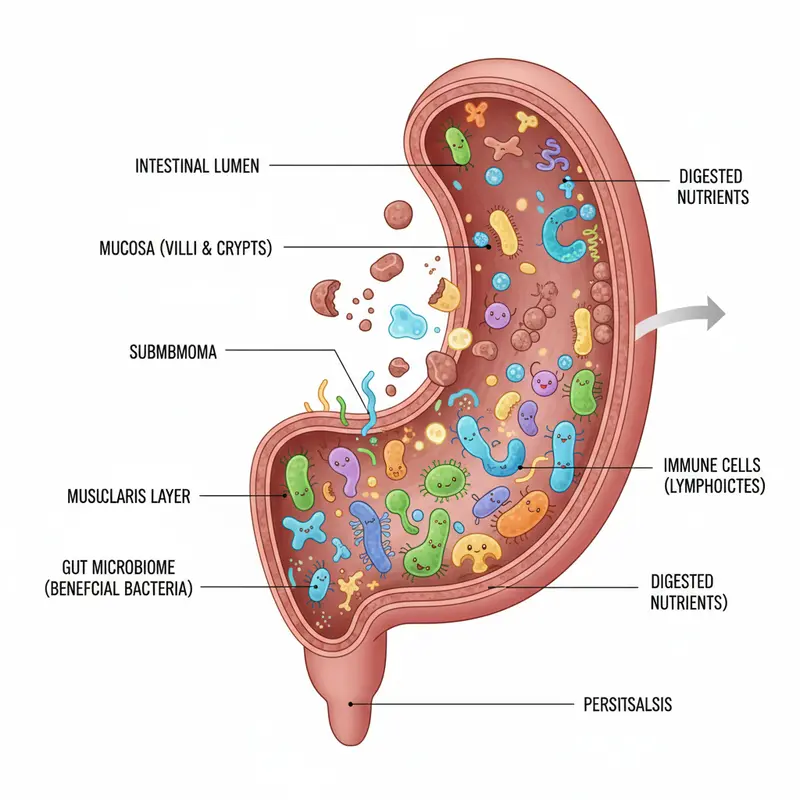
    Diagram of the gut microbiome ecosystem

    Okay, so what is “gut health” anyway? For me, I think of our gut like a bustling little garden right inside us. It’s where our digestive system does its amazing work, and it’s home to a huge community of friendly bacteria—that’s our “microbiome.” When this garden is happy and thriving, everything just hums along. We digest food better, our body absorbs all the good stuff, and even our immune system gets a boost. But when things get out of whack, trust me, you feel it: tummy troubles, feeling run down, even just feeling a bit foggy.
    So, why is breakfast such a big deal for this gut garden? Well, after we’ve been sleeping all night, our digestive system has been pretty quiet. That first meal, our healthy gut breakfast, is like the gentle alarm clock for our gut! It gets things moving and feeds all those good bacteria. I used to be a breakfast skipper, thinking I was saving time, but honestly, my energy and digestion suffered. Now, I see studies talking about how breakfast eaters often have a richer variety of gut bugs, and that’s a good thing for gut balance!

    What makes for an ideal healthy gut breakfast? I’ve learned to look for three key things: fiber, probiotics, and prebiotics. Think of fiber—like the kind in oats, fruits, and veggies—as the favorite food for our good gut bacteria. They just love to munch on it, which helps them grow and diversify. Then there are probiotics, those live, friendly bacteria you find in yummy fermented foods like yogurt or kefir. They’re like reinforcements, helping to restock and balance our gut garden. And prebiotics? They’re special fibers, in foods like bananas or even garlic (maybe not for breakfast, ha!), that specifically feed our existing good bacteria, making them stronger and more resilient. It’s all about creating a happy home for them!

    When we bring these amazing nutrients together at breakfast, it really sets the stage for a great day. It helps our tummies feel good, keeps our gut barrier strong, and even gives our immune system a little hug, all day long.

    Healthy gut breakfast foods with key benefits

    Common Foods Beneficial for Gut Health at Breakfast

    Food ItemKey BenefitTypical Serving AmountPreparation Tips
    Greek YogurtProbiotic source1 cupServe with fresh fruit
    OatsHigh soluble fiber1/2 cupSoak overnight for better digestion

    Checklist for gut-healthy breakfast ingredients

    Checklist for Gut-Healthy Breakfast Components

    • Include soluble fiber
    • Add fermented foods
    • Limit added sugars

    So, when it comes to keeping our gut happy, let’s be real, a good breakfast sets the tone for everything! It’s like giving our internal garden the perfect start to the day. For me, making a healthy gut breakfast a regular thing has been one of the simplest, yet most impactful habits. It’s not about being perfect every day, but about taking those little steps to nourish our microbiome and support our digestion. Trust me, your gut will thank you!

  • Gentle and Soothing Recipes for Stomach Issues

    Gentle and Soothing Recipes for Stomach Issues

    Oh, mealtime. As a mom of two, I know the struggle is real! Especially when someone in the family (or me!) is dealing with a grumpy tummy. Whether it’s that gnawing acid reflux, a bout of indigestion, or just a general ‘owie’ feeling, it can feel like a minefield just trying to get a decent, comforting meal on the table. Trust me, I’ve been there, staring into the fridge, wondering what on earth won’t make things worse.

    Through lots of trial and error (and a few burnt dinners, let’s be real!), I’ve discovered that picking the right foods can make all the difference. It’s like giving your belly a warm hug! So, I’ve gathered some of our family’s favorite gentle and soothing recipes for stomach issues. These aren’t fancy; they’re just simple, natural, and incredibly kind to your digestive system. Think of them as your little allies in promoting better gut health.

    Table of Contents

    My Go-To Gentle Recipes for Stomach Issues (Because Life’s Too Short for Tummy Troubles!)

    When those common tummy troubles like acid reflux or indigestion show up, it can throw a wrench in everything. I’ve found that having a few go-to, gut-friendly meals up my sleeve is a lifesaver. These aren’t just bland; they’re actually quite comforting and packed with good stuff. Here are four simple, nutritious dishes that have really helped our family ease digestive discomfort and keep those sensitive stomachs happy.
    Warm bowl of ginger-carrot soup

    1. Ginger-Carrot Soup

    This soup? Oh, it’s like a warm, comforting hug for your insides, especially when things feel a bit off. I first made this when my eldest had a nasty stomach bug, and it was a total hit!
    Ingredients: Fresh ginger, carrots, low FODMAP vegetable broth, olive oil, salt.

    Health Benefits: That spicy ginger isn’t just tasty; it’s a superhero for soothing nausea and calming inflammation. Carrots bring in some gentle fiber, which helps things move along smoothly, and using a low FODMAP broth means less gassy worries. Win-win!

    Nutrition: 180 kcal, 4 g fiber, low FODMAP.

    Portion Size: 1 cup per serving. Just right for a delicate tummy.

    Prep/Cook Time: 10/20 minutes.

    Step-by-Step:

    • Sauté grated ginger in olive oil for 2 minutes.
    • Add chopped carrots and broth.
    • Simmer for 15 minutes until carrots are soft.
    • Blend until smooth.
      Breakfast bowl with oatmeal, banana, and chia seeds


      2. Oatmeal with Banana and Chia Seeds


    Breakfast can be tricky, right? But this combo? It’s my secret weapon for starting the day on a tummy-friendly note. It’s so simple, even on those crazy mornings.

    Ingredients: Rolled oats, ripe banana, chia seeds, water or lactose-free milk.

    Health Benefits: Oats and chia are packed with soluble fiber, which is fantastic for reducing stomach irritation – kind of like a gentle buffer. And bananas? They’re a great source of potassium, helping to keep everything balanced.

    Nutrition: 300 kcal, 7 g fiber, low FODMAP.

    Portion Size: 1/2 cup dry oats serving.

    Prep/Cook Time: 5/5 minutes.

    Step-by-Step:

    • Cook oats in water or milk.
    • Mash banana and mix in.
    • Top with chia seeds.

      3. Steamed White Fish with Zucchini


    When I need a light dinner that won’t upset anyone’s stomach, this is my go-to. It feels fancy, but it’s actually super easy and gentle. My kids even approve!

    Ingredients: White fish fillet (cod or sole), zucchini, olive oil, lemon juice.

    Health Benefits: White fish is so easy for your body to digest, plus it gives you a good protein boost without being heavy. Zucchini is just super gentle on the stomach, making it a perfect companion.

    Nutrition: 250 kcal, 3 g fiber, low FODMAP.

    Portion Size: 4 oz fish with 1/2 cup zucchini.

    Prep/Cook Time: 5/10 minutes.

    Step-by-Step:

    • Season fish with lemon juice and a pinch of salt.
    • Steam fish and zucchini together until cooked (approx. 10 minutes).
    • Drizzle olive oil before serving.
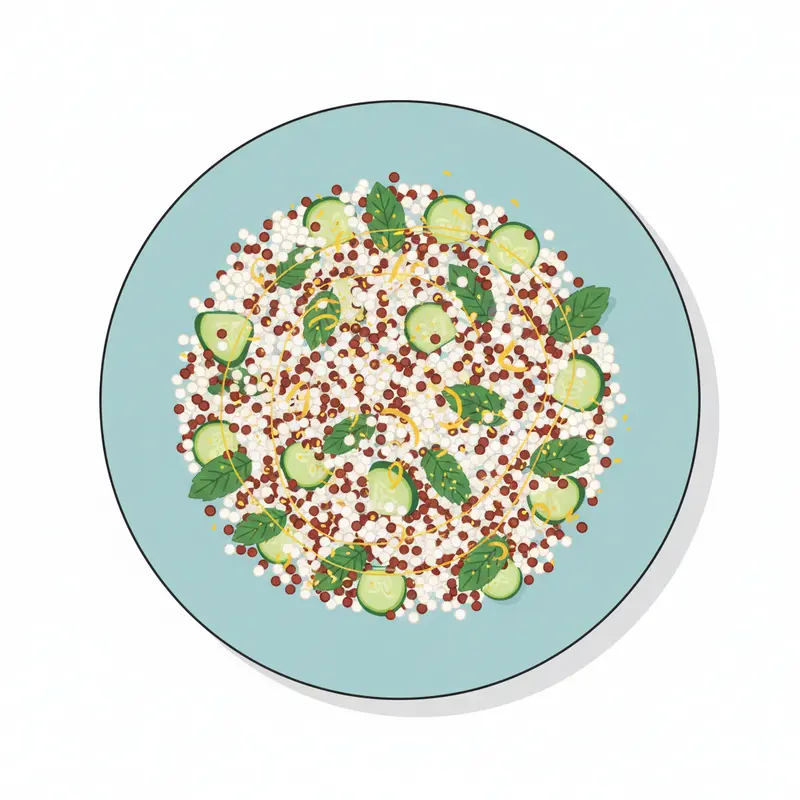
      Fresh quinoa salad with cucumber and mint

    4. Quinoa Salad with Cucumber and Mint

    Sometimes you just need something fresh and cool when your stomach feels hot and bothered. This salad is surprisingly satisfying and incredibly refreshing.

    Ingredients: Quinoa, cucumber, fresh mint, olive oil, lemon zest.

    Health Benefits: Quinoa is a little powerhouse, offering a complete protein and some gentle fiber. Cucumber and mint? They’re like a little spa treatment for your insides, with wonderful cooling properties.

    Nutrition: 220 kcal, 5 g fiber, low FODMAP.

    Portion Size: About 1 cup salad.

    Prep/Cook Time: 15/5 minutes.

    Step-by-Step:

    • Rinse and cook quinoa until fluffy.
    • Chop cucumber and mint.
    • Mix all with olive oil and lemon zest.

    Recipe Comparison Table: Fiber and FODMAP Levels

    RecipeFiber (g)FODMAP Content

    ———–|—————| | Ginger-Carrot Soup | 4 | Low | | Oatmeal with Banana and Chia | 7 | Low | | Steamed White Fish with Zucchini | 3 | Low | | Quinoa Salad with Cucumber and Mint | 5 | Low |

    Tips for Serving and Storage

    When your tummy is being a bit sensitive, remember the golden rule: start small! Serving up little portions helps prevent that “oh no, I ate too much!” feeling. And if you have leftovers (which is rare in my house, but hey!), pop them in the fridge for up to two days. When you’re ready to eat, warm them up gently. We don’t want to zap all that goodness away!
    This might look like a fancy checklist, but it’s really just my common-sense guide for picking out the best gentle recipes for stomach issues when your gut needs some extra love.

    Checklist: My Go-To Criteria for Picking Gentle Recipes for Stomach Issues – Low fiber content (sometimes too much fiber can be a bit much!) – Mild spices (let’s keep the fire out of our bellies!) – Easily digestible ingredients (the simpler, the better, I say!)

    A Little Bonus: Our Favorite Gut-Friendly RecipeGentle Chicken and Rice Soup – Ingredients: Chicken breast, white rice, carrots, celery, ginger – Instructions: Simmer chicken and vegetables with rice in low sodium broth until soft

    I’ve learned that these kinds of dishes—combining a bit of kitchen wisdom with what just feels right—are truly stomach-friendly. The whole low FODMAP and gentle fiber thing really does help reduce irritation and keep everything calm. So, don’t be afraid to try these simple, soothing meals. Your gut will thank you!

    Conclusion

    So, there you have it! Who knew that just by choosing the right meals, you could make such a huge difference for your stomach? It’s not about perfection, but about finding those gentle recipes for stomach issues that really click for you and your family. These wholesome, easy-to-digest ingredients really do calm things down and make you feel nourished. Whether it’s that annoying acid reflux, a touch of gastritis, or just feeling ‘bleh,’ I hope these tasty options become your go-to allies in keeping your tummy happy and balanced. Remember, every little step counts!

    Frequently Asked Questions

    Q1: What to cook for someone with stomach problems? A1: Oh, that’s a common one! When someone’s got a grumpy gut, I always reach for simple, low-fiber, and low-FODMAP dishes. Think gentle ingredients like soothing ginger, soft carrots, light white fish, or comforting oats. The goal is to give that stomach a little tender loving care, not overwhelm it!
    Q2: What should I eat for dinner with an upset stomach? A2: Dinner with an upset stomach? Been there! I usually lean towards super easy-to-digest meals. A nice option is steamed white fish with some plain veggies, or a bowl of warm oatmeal with a ripe banana. And definitely avoid anything too spicy or greasy – that’s just asking for trouble, trust me!

    Q3: What is a homemade recipe for an upset stomach? A3: My absolute favorite homemade remedy is that Ginger-Carrot Soup we talked about earlier! It’s such a winner. The ginger is wonderfully soothing, and the carrots bring in some gentle nutrients. It’s simple, quick, and really hits the spot when your stomach needs some TLC.

    Q4: What to eat for dinner with digestive issues? A4: For dinner when digestive issues are flaring up, I focus on balanced, calming meals. Think along the lines of that quinoa salad with cucumber and mint for something refreshing, or my go-to gentle chicken and rice soup. The key is to include a good protein, some gentle fiber, and those lovely soothing herbs to help everything settle down nicely.

  • Colitis Friendly Recipes: Tailored Diet Tips for Symptom Relief & Healing

    Colitis Friendly Recipes: Tailored Diet Tips for Symptom Relief & Healing

    Colitis, a chronic inflammatory bowel disease, requires carefully tailored dietary approaches to manage symptoms effectively and support gut healing. Whether you’re experiencing a flare-up or in remission, understanding which foods to include or avoid can significantly impact your comfort and nutrition. This guide offers practical recipes and dietary tips designed specifically for different stages of colitis, helping you choose meals that soothe your digestive tract while providing balanced nourishment.

    Understanding Dietary Needs for Different Stages of Colitis

    Colitis, an inflammatory bowel condition, presents in varying stages—primarily remission and flare-ups—each demanding distinct dietary strategies to manage symptoms and promote healing.

    Disease Stage Definitions and Symptoms

    • Remission: Period when symptoms are minimal or absent. Patients often feel well but remain vulnerable to relapse.
    • Flare-up: Active inflammation triggers symptoms such as abdominal pain, diarrhea, bleeding, and fatigue, significantly impacting nutrient absorption.

    Dietary Adjustments Based on Symptoms

    • During remission: Goal is to maintain nutrition and prevent flare-ups. Diets can be more diverse (including moderate fiber and a variety of foods) but with caution toward known triggers.
    • In flare-ups: Diet must minimize irritation and aid bowel rest. Typically requires low-fiber, bland foods, plus careful fluid and calorie management.
    Table of safe and unsafe foods for colitis stages

    Safe and Unsafe Foods by Stage

    Food CategoryRemission (Safe)Remission (Avoid)Flare-up (Safe)Flare-up (Avoid)
    FruitsPeeled apples, bananasCitrus fruits, berriesBananas (mashed)Raw fruits, seeds
    VegetablesCooked carrots, squashRaw vegetables, cornPureed or steamedHigh-fiber, cruciferous
    ProteinsLean meats, fishProcessed meatsTender, boiled chickenFried or fatty meats
    GrainsWhite bread, riceWhole grains, branWhite rice, refined grainsWhole grains
    DairyLactose-free optionsFull-fat dairy (if intolerant)Limited dairy (based on tolerance)Full-fat, hard cheeses

    Nutrient Absorption Challenges

    Flare-ups impair absorption of vital nutrients (iron, calcium, vitamin D, B vitamins), risking deficiencies and anemia. Remission improves absorption but requires vigilance.

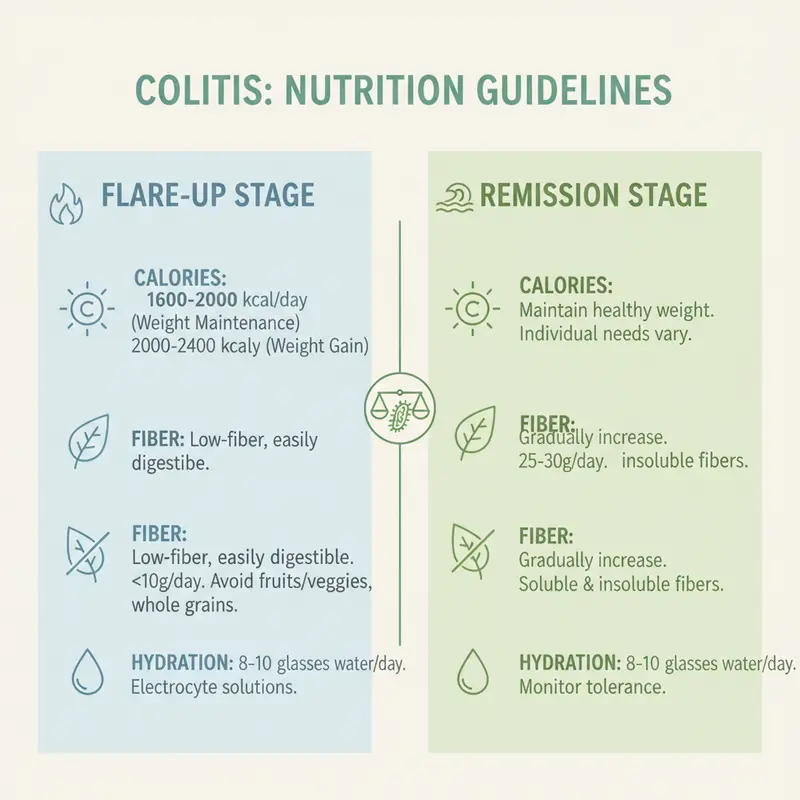
    Balance of calorie and fiber intake during colitis stages

    Calorie and Fiber Intake Guidelines

    • Flare-ups: Calorie needs may increase to support healing; fiber intake must be low to avoid exacerbation. Boost caloric density with smooth, nutrient-rich, easy-to-digest foods.
    • Remission: Fiber intake can gradually increase to meet normal recommendations (~25-30g/day) to aid gut health and regularity, while maintaining balanced calories.

    Hydration Importance

    Both stages require diligent hydration—especially during flare-ups, where diarrhea leads to increased fluid loss. Electrolyte-rich fluids are beneficial.

    Foods Recommended and to Avoid by Colitis Stage

    Colitis StageRecommended FoodsFoods to Avoid
    Active FlareLow-fiber cooked vegetables, lean proteinsHigh-fiber, spicy, fatty foods
    RemissionWide range of fruits, vegetables, whole grainsExcessive alcohol, heavily processed foods

    Use this table to quickly illustrate suitable and unsuitable foods during active flare vs remission periods for colitis patients.

    Key Dietary Tips for Managing Colitis at Different Stages

    • Focus on low-residue foods during flare-ups
    • Increase soluble fiber gradually during remission
    • Stay well hydrated to support digestion

    These practical diet tips are tailored to colitis stages to help manage symptoms effectively.

    Sample meal plan for colitis flare-up and remission stages

    Sample Meal Plan for Active and Remission Stages

    Meal TimeActive Stage ExampleRemission Stage Example
    BreakfastOatmeal with peeled applesWhole grain toast with avocado
    LunchBoiled chicken with cooked carrotsGrilled salmon with quinoa and steamed broccoli

    This example helps visualize concrete meal ideas for each colitis stage.

    Practical Tips for Recipe Modification

    • Use cooking methods like boiling, steaming, and pureeing during flare-ups to reduce irritation.
    • Substitute high-fiber ingredients with low-residue alternatives for easier digestion.
    • Introduce probiotics and prebiotics cautiously, observing individual tolerance.

    Summary

    Adapting dietary plans to colitis stages—favoring gentle, low-fiber foods during flare-ups and a diversified diet during remission—optimizes symptom control and nutrition. Monitoring individual food tolerance and consulting with healthcare providers is essential for personalized, colitis-friendly recipes that support patient well-being.


    FAQ

    Q: What is a good dinner for someone with colitis?

    A: During flare-ups, opt for low-fiber, bland meals like boiled chicken with cooked carrots or white rice. In remission, you can enjoy more varied dishes such as grilled salmon with quinoa and steamed vegetables.

    Q: What’s the best food to eat for colitis?

    A: The best foods vary by disease stage; generally, easy-to-digest, low-residue foods during flare-ups and a balanced diet rich in soluble fiber during remission are recommended.

    Q: Can you eat scrambled eggs with colitis?

    A: Yes, scrambled eggs are generally easy to digest and can be included—especially during remission or mild flare-ups—provided they are prepared without added fats or spices.

    Q: What can I put on pasta with colitis?

    A: Opt for simple, low-fat sauces such as plain tomato sauce without spices or a small amount of olive oil. Avoid creamy or spicy sauces that may irritate your bowel.

  • Effective Gut Health Drinks for Targeted Digestive Relief

    Effective Gut Health Drinks for Targeted Digestive Relief

    Mom preparing gut health drinks at home

    Maintaining gut health is crucial for overall well-being, especially for those experiencing digestive issues like constipation, inflammatory bowel disease (IBD), or gut microbiome imbalance.

    This article explores targeted gut health drinks designed to alleviate specific digestive problems and support microbiome balance. Whether you seek symptom relief or to enhance your gut flora, understanding the right drinks and precautions can help you achieve better digestive health naturally.


    Targeted Gut Health Drinks for Specific Digestive Issues

    Digestive issues vary widely, affecting millions worldwide with symptoms ranging from constipation to inflammatory bowel disease (IBD).

    Targeted gut health drinks are designed to address these specific problems rather than offering generalized support. Understanding the unique benefits and precautions of each drink is essential for effective symptom relief and overall gut microbiome balance.

    Glass of prune juice with prunes

    1. Drinks for Constipation Relief

    For constipation, drinks rich in soluble fiber and natural laxatives prove most effective.

    • Prune juice contains sorbitol, which accelerates bowel movements by drawing water into the colon. Clinical studies show it improves stool frequency and ease in 75% of patients within a week.
    • Psyllium husk-based drinks increase stool bulk and promote regularity. However, excessive intake may cause bloating; users should start with low doses.
    
Fermented gut health drinks: kefir and kombucha

    Clinical studies emphasize prune juice as a key remedy for constipation improvements.

    2. Drinks Beneficial for Inflammatory Bowel Disease (IBD)

    Inflammatory bowel diseases such as Crohn’s and ulcerative colitis require anti-inflammatory and microbiome-balancing effects.

    • Drinks enriched with prebiotics (like inulin or oligosaccharides) support beneficial bacteria growth, reducing inflammation.
    • Fermented drinks (kefir, kombucha) possess probiotic strains that lower IBD flare-up frequency, according to multiple case studies.

    However, some IBD patients may experience sensitivity to certain fermented drinks and should consult a gastroenterologist before use.

    Gut microbiome garden with flowers and weeds

    3. Drinks for General Dysbiosis and Microbiome Balance

    General gut dysbiosis benefits from drinks containing a blend of prebiotics and probiotics.

    • Synbiotic drinks combine both prebiotics and probiotics, enhancing gut flora diversity, improving digestion, immunity, and reducing gastrointestinal discomfort.
    • Green smoothies with added flaxseeds or chia seeds provide fiber and antioxidants supporting microbiome health.

    However, overconsumption of probiotic drinks without a varied diet can lead to imbalance or adverse reactions.

    4. Contraindications and Precautions

    Each digestive condition demands tailored caution:

    • Those with fructose intolerance should avoid high-fructose drinks (e.g., certain fruit juices).
    • Individuals with SIBO (small intestinal bacterial overgrowth) may worsen symptoms if consuming probiotic drinks indiscriminately.

    It is crucial to select gut health drinks based on individual symptomatology and medical history, ideally under medical guidance.

    5. Selection Criteria Based on Symptoms

    • Constipation: Opt for fiber-rich or natural laxative drinks (e.g., prune juice, psyllium husk).
    • IBD: Choose probiotic and prebiotic fermented drinks (e.g., kefir), but test tolerance.
    • Dysbiosis: Use synbiotic beverages combining probiotics and prebiotics.
    • Sensitive Conditions: Avoid high-sugar or fermentable oligosaccharides if intolerant.

    6. Supporting Evidence Summary

    • A 12-week clinical trial demonstrated daily prune juice increased stool frequency by 40% in constipated adults.
    • Case studies report reduced IBD flare-ups after three months of kefir consumption.
    • Comparative tables highlight efficacy ranking: prune juice > psyllium > general probiotics for constipation.
    • Expert gastroenterologists emphasize individualized drink selection based on diagnostic tests.
    Table of gut health drink effectiveness by digestive issues

    7. Table: Drink Effectiveness Across Gut Issues

    Drink TypeConstipation ReliefIBD SupportDysbiosis BalancePrecautions
    Prune JuiceHighLowModerateMay cause laxative dependency
    Psyllium HuskModerateLowModerateRequires adequate hydration
    KefirLowHighHighPotential intolerance in IBD
    KombuchaLowModerateModerateHigh acidity may irritate gut
    Synbiotic DrinksModerateModerateHighOverconsumption risks
    Checklist for selecting gut health drinks by symptoms

    8. Checklist for Selecting Drinks by Symptoms

    • Identify dominant symptom (constipation, inflammation, dysbiosis)
    • Research drink composition relevant to symptom
    • Consider potential allergies/intolerances
    • Start with small quantities to monitor reactions
    • Consult healthcare provider for chronic or severe cases

    9. Quick Reference: Gut Health Drinks & Targeted Issues

    Drink TypeKey IngredientsTargeted Digestive IssueRecommended Consumption
    Probiotic Yogurt DrinkLactobacillus acidophilusIBS1 bottle daily
    KombuchaScoby culture, organic acidsAcid Reflux150ml before meals

    Use this table to quickly identify which drinks are best for specific digestive problems and their consumption guidelines.

    10. Tips for Choosing the Right Gut Health Drink

    • Identify your specific digestive concern
    • Review drink options with targeted probiotics or prebiotics
    • Check for clinical evidence supporting effectiveness
    • Consult healthcare provider if needed

    In conclusion, targeted gut health drinks offer symptom-specific relief and microbiome enhancement when chosen wisely. Clinical evidence and expert guidance aid effective selection, transforming gut care from a generic approach to a precision strategy tailored to individual digestive challenges.


    Conclusion

    Choosing the right gut health drink is a vital step toward improving digestive wellness. Whether dealing with constipation, IBD, or general dysbiosis, targeted drinks can support symptom relief and promote a balanced microbiome.

    Always consider your body’s unique needs, stay informed with credible research, and consult health professionals when necessary for optimal results.


    Frequently Asked Questions

    Q1: What drink cleans your gut?

    Drinks rich in fiber, probiotics, and natural laxatives like prune juice, kefir, and synbiotic beverages help cleanse the gut. They promote regular bowel movements and balance gut bacteria.

    Q2: How can I repair my gut health fast?

    Incorporate probiotic and prebiotic drinks (e.g., kefir, fermented beverages), maintain a balanced diet rich in fiber, and stay hydrated. Consult a healthcare provider for personalized advice.

    Q3: What is the 7 day gut reset?

    The 7 day gut reset involves a short-term dietary plan. It focuses on cleansing and restoring gut health with fiber-rich foods and gut-friendly drinks to reduce inflammation and rebalance gut flora.

    Q4: What to drink in the morning for a healthy gut?

    Warm water with lemon, herbal teas, or probiotic-rich drinks like kefir are ideal morning choices. They stimulate digestion and support gut health.

    Morning drinks for a healthy gut
  • Best Time to Eat Sauerkraut for Gut Health

    Best Time to Eat Sauerkraut for Gut Health

    Sauerkraut, a fermented food rich in probiotics, is gaining popularity as a natural way to support gut health. Understanding the best time to consume it can significantly enhance its benefits by optimizing probiotic survival and effectiveness. This article explores the science behind timing sauerkraut consumption and offers practical guidance for daily use.

    Table of Contents

    • Understanding the Science Behind Timing
    • Sauerkraut Timing & Gut Health Benefits
    • Factors Influencing Optimal Timing
    • Frequently Asked Questions
    (more…)
  • Best Probiotic for Women: Top Picks, Safety, and Trends in 2025

    Best Probiotic for Women: Top Picks, Safety, and Trends in 2025

    Choosing the right probiotic is essential for women seeking to improve vaginal health, digestion, immune function, and overall wellness. With numerous products targeted at women, featuring diverse strains and benefits, understanding effective strains, proper dosing, and emerging trends can empower women to make informed choices. This article explores the best probiotics tailored for women, how to select the ideal product for your health profile and age, long-term safety of daily use, integration with prebiotics, and innovations shaping the market.

    Table of Contents

    • Comparative Analysis of Top Probiotics Tailored for Women
    • How to Choose the Right Probiotic Based on Your Health Profile and Age
    • Long-Term Safety and Benefits of Daily Probiotic Use for Women
    • Integrating Prebiotics and Synbiotics with Probiotics for Enhanced Women’s Health
    • Emerging Trends and Innovative Probiotic Formulations for Women
    (more…)