
Choosing the right probiotic is essential for women seeking to improve vaginal health, digestion, immune function, and overall wellness. With numerous products targeted at women, featuring diverse strains and benefits, understanding effective strains, proper dosing, and emerging trends can empower women to make informed choices. This article explores the best probiotics tailored for women, how to select the ideal product for your health profile and age, long-term safety of daily use, integration with prebiotics, and innovations shaping the market.
Table of Contents
- Comparative Analysis of Top Probiotics Tailored for Women
- How to Choose the Right Probiotic Based on Your Health Profile and Age
- Long-Term Safety and Benefits of Daily Probiotic Use for Women
- Integrating Prebiotics and Synbiotics with Probiotics for Enhanced Women’s Health
- Emerging Trends and Innovative Probiotic Formulations for Women
Comparative Analysis of Top Probiotics Tailored for Women
Women-specific probiotics primarily rely on strains of Lactobacillus and Bifidobacterium due to their proven efficacy in supporting vaginal health, digestion, and immune function. Key strains include Lactobacillus rhamnosus, Lactobacillus reuteri, and Bifidobacterium lactis, which restore and maintain a healthy vaginal microbiome, reduce urogenital infections, and enhance gut flora balance.
Comparative analysis reveals that leading probiotics tailored for women vary significantly in strain diversity and CFU (colony-forming units) count. For instance, Product A offers a comprehensive blend of five Lactobacillus and three Bifidobacterium strains totaling 25 billion CFU per dose, aimed at broad-spectrum women’s health. In contrast, Product B focuses on high potency with 50 billion CFU but includes fewer strains, emphasizing immune support and digestion rather than vaginal health.
| Product Name | Strain Composition | CFU Count | Targeted Benefits |
|---|---|---|---|
| Physicians Choice | Lactobacillus Rhamnosus, Bifidobacterium Longum | 30 billion | Vaginal and Digestive Health |
Clinical studies strongly support the effectiveness of Lactobacillus rhamnosus and reuteri for reducing bacterial vaginosis recurrence by over 40% and enhancing local immunity. Bifidobacterium lactis is documented to improve gut barrier function, aiding digestion and reducing inflammation, critical factors in women’s overall wellness. Delivery formats—capsules, powders, and vaginal suppositories—affect probiotic viability and targeting, with delayed-release capsules showing superior strain survival through the gastrointestinal tract.
Evidence-based analysis suggests women should select probiotics based on their specific health priorities. For vaginal health focus, a multi-strain product with clinical backing on Lactobacillus rhamnosus and reuteri at 20 billion CFU or more is optimal. For digestive and immune support, higher CFU counts with a broader mix including Bifidobacterium lactis are advantageous.
Key Features to Consider When Choosing a Probiotic for Women:
> – Strain Diversity
> – CFU Count
> – Specific Health Benefits
> – Third-party Testing
> – Price
In conclusion, the best probiotic for women is one that balances strain diversity with targeted clinical benefits and optimized delivery methods. Choosing products from reputable manufacturers that transparently list strains and CFU counts ensures efficacy and safety. Tailored probiotics empower women to address specific health concerns effectively, making strain composition and clinical evidence paramount in product selection.
How to Choose the Right Probiotic Based on Your Health Profile and Age
Selecting the best probiotic for women requires a nuanced approach that aligns with individual health conditions and age-specific needs. Women commonly face health challenges such as urinary tract infections (UTIs), hormonal imbalances, digestive issues, and immune dysfunction, all of which influence the optimal probiotic choice.
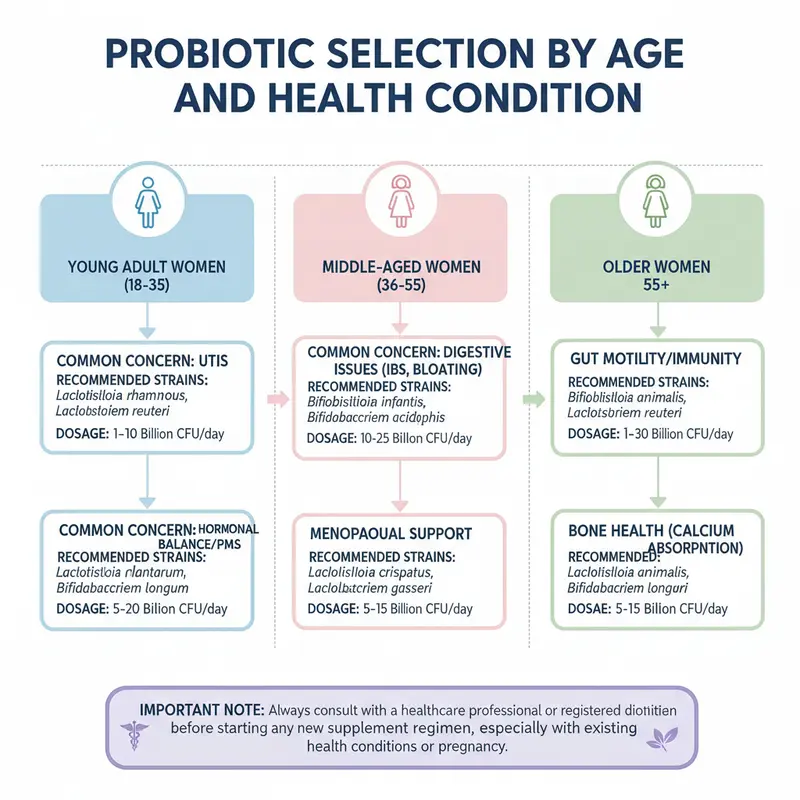
Age significantly alters probiotic requirements — younger women often benefit from strains that support hormonal balance and reproductive health, such as Lactobacillus rhamnosus and Lactobacillus reuteri, which help prevent UTIs and maintain vaginal flora. Middle-aged women, particularly those undergoing perimenopause or menopause, need probiotics emphasizing hormone metabolism and bone health, including Bifidobacterium strains that support estrogen metabolism. In older women, probiotics supporting digestive efficiency and immune function become critical, focusing on strains like Bifidobacterium longum.
To choose effectively, start by identifying symptoms or diagnosed conditions: recurrent UTIs suggest formulations rich in Lactobacillus; digestive complaints warrant multispecies probiotics with proven gut barrier support, such as Lactobacillus acidophilus and Bifidobacterium bifidum. Step-by-step, match your health profile with these strains, then verify dosage efficacy (typically 10 to 20 billion CFUs daily) and quality standards including verified strain identity and viability throughout shelf life.
Medical consultation is indispensable for personalized guidance, especially when managing complex conditions or combining probiotics with other treatments. Healthcare professionals can tailor recommendations based on evidence and monitor outcomes.
| Life Stage | Key Probiotic Strain(s) | Primary Health Benefit | Recommended CFU Range |
|---|---|---|---|
| 20s-30s | Lactobacillus rhamnosus, Bifidobacterium lactis | Support digestive balance and vaginal flora | 5-10 billion |
| 40s-50s | Lactobacillus reuteri, Bifidobacterium longum | Menopause symptom relief and digestive support | 10-20 billion |
Key Factors When Choosing a Probiotic for Women:
> – Age and reproductive stage
> – Specific health concerns (e.g., UTI, IBS, fertility)
> – CFU count suitable for condition
> – Strain diversity and evidence-based strains
> – Product quality and manufacturing standards
This personalized framework empowers women to confidently select probiotics that target their unique health profiles and life stages, bridging the gap left by generic probiotic recommendations.
Long-Term Safety and Benefits of Daily Probiotic Use for Women
Long-term daily use of probiotics offers substantial benefits for women, including enhanced digestive health, improved immune function, and sustained vaginal microbiome balance. Longitudinal clinical studies consistently demonstrate that women who incorporate probiotics into their daily routine experience fewer instances of gastrointestinal disturbances such as irritable bowel syndrome and recurring urinary tract infections, confirming efficacy over time.
Safety data from regulatory agencies and expert consensus have found no significant risks associated with prolonged probiotic consumption in healthy women. Most common side effects—such as mild bloating or gas—are transient and typically resolve within days. Importantly, serious adverse events are rare when probiotics are sourced from reputable manufacturers and taken as directed.
Misconceptions persist around probiotics causing infections or long-term imbalance; however, scientific evidence dispels these concerns. Probiotics generally support a balanced microbiota without displacing native beneficial bacteria, even with extended use.
For safe long-term use, women should select probiotics tailored to their specific health needs, preferably strains clinically proven for women’s health, such as Lactobacillus rhamnosus and Bifidobacterium strains. Consistent dosing around the same time daily maximizes colonization and benefits. Monitoring any unusual symptoms and consulting healthcare providers when pregnant, breastfeeding, or immunocompromised is advised.
Special populations warrant additional oversight: pregnant women benefit from probiotics that reduce risks of bacterial vaginosis and preterm birth, while immunocompromised individuals must use probiotics cautiously due to potential infection risks, under medical supervision.
| Benefit Category | Description | Supporting Evidence Source |
|---|---|---|
| Digestive Health | Regular use improves gut flora balance and digestion | my.clevelandclinic.org |
Checklist for Evaluating Probiotics for Women’s Long-Term Use:
> – Contains clinically studied strains
> – Has minimal side effects
> – Appropriate CFU count per dose
Daily probiotic supplementation is a safe and effective strategy to support women’s health, provided product selection and usage follow evidence-based recommendations. Incorporating the best probiotic for women into daily routines can lead to long-lasting improvements in digestive and reproductive health with minimal risk.
Integrating Prebiotics and Synbiotics with Probiotics for Enhanced Women’s Health
Prebiotics and synbiotics, when integrated with probiotics, substantially elevate the effectiveness of women’s health interventions. Prebiotics are non-digestible fibers serving as nourishment for beneficial gut bacteria, whereas synbiotics are formulations combining both probiotics and prebiotics to synergistically enhance microbiome balance.
Common prebiotics beneficial to women’s microbiome include inulin, fructooligosaccharides (FOS), galactooligosaccharides (GOS), and resistant starches. These compounds selectively stimulate growth of beneficial bacteria such as Lactobacilli and Bifidobacteria, crucial for digestion, immunity, and maintaining vaginal flora.
Extensive research validates the combined use of probiotics with prebiotics or synbiotics for improved health outcomes. Clinical studies demonstrate that synbiotic supplementation significantly improves digestive comfort, enhances immune response, and promotes vaginal health by sustaining an optimal microbiota even under stress or antibiotic exposure. For example, women using synbiotic products report decreased incidence of urinary tract infections and better regulation of menstrual-related gastrointestinal symptoms.
Selecting appropriate synbiotic products involves assessing strains of probiotics proven effective for women, like Lactobacillus rhamnosus and Bifidobacterium lactis, alongside clinically backed prebiotics. Consumers should seek transparency regarding colony-forming units (CFUs), strain specificity, and prebiotic types included.
Dietary integration is equally critical—natural prebiotic foods such as chicory root, garlic, onions, bananas, and asparagus complement probiotic intake effectively. A balanced approach combining targeted supplementation plus a diet rich in prebiotic fibers yields superior microbiome resilience and health support.
| Supplement Type | Common Strains/Formulations | Typical Dosages | Main Female Health Benefits |
|---|---|---|---|
| Probiotic | Lactobacillus rhamnosus, Bifidobacterium lactis | 10 billion CFU daily | Improves vaginal microbiota and digestive health |
| Prebiotic | Inulin, Fructooligosaccharides (FOS) | 5-10 grams daily | Supports growth of beneficial bacteria |
| Synbiotic | Combination of probiotics and prebiotics | Varies by product | Enhanced gut and vaginal health synergy |
Key Points for Integrating Synbiotics in Women’s Health Regimen:
> – Evaluate product strain diversity
> – Check probiotic CFU count
> – Assess presence and type of prebiotics
> – Look for clinical backing
In conclusion, integrating prebiotics and synbiotics with probiotics is a strategic approach to enhance women’s health by optimizing microbiota function. This combination supports digestive health, bolsters immunity, and maintains vaginal microbiome balance more effectively than probiotics alone. For best results, women should select clinically validated synbiotic products and incorporate diverse prebiotic-rich foods into their daily diets.
Emerging Trends and Innovative Probiotic Formulations for Women
The probiotic market tailored for women’s health is rapidly evolving with groundbreaking innovations that address specific physiological needs. New brands such as FemBiome and HerGut have entered the market focusing exclusively on female-centric strains, reflecting a growing niche. These companies employ novel probiotic strains like Lactobacillus crispatus and Limosilactobacillus reuteri, which exhibit enhanced colonization in the female urogenital tract, distinct from general probiotics.
Innovative delivery systems are transforming efficacy and compliance. Delayed-release capsules enable targeted delivery to the gut or vaginal environment, reducing degradation by stomach acid and optimizing probiotic viability. Powder formulations designed for oral or intravaginal use provide flexible administration modes, improving user adherence. Some products incorporate prebiotic blends, forming synbiotics that enhance microbial survival and function.
Genetic enhancements and precision blending signify another frontier. Proprietary strain blends combining genetically characterized microbes are engineered to balance estrogen metabolism, modulate immune response, and inhibit pathogenic colonization. For example, next-generation probiotics may carry genes coding for bacteriocins or hormone-modulating enzymes, delivering targeted therapeutic effects previously unattainable with conventional formulations.
Clinical evidence, although nascent, supports many of these innovations. Recent pilot studies show statistically significant improvements in vaginal pH normalization and symptomatic relief of bacterial vaginosis using novel strain blends over placebos. Industry experts foresee several ongoing Phase II and III trials aiming to corroborate these early findings and further define optimal dosage and delivery methods.
However, limitations exist: regulatory frameworks are still adapting to these advancements, and long-term safety profiles require thorough validation. Market adoption will hinge on transparent clinical validation and cost-effective manufacturing.
Looking ahead, future developments will likely include personalized probiotics guided by microbiome sequencing, integration with digital health monitoring, and expansion into hormone-responsive formulations for menopausal and reproductive health challenges.
| Strain Name | Primary Health Benefit | Commonly Found In |
|---|---|---|
| Lactobacillus rhamnosus | Supports vaginal health and balance | Women’s probiotic supplements |
| Bifidobacterium lactis | Enhances digestive health and immunity | Multifunctional probiotic formulas |
Features to Look for in Innovative Women’s Probiotics:
> – Contains prebiotics
> – Multiple targeted strains
> – Supports vaginal and gut health
> – Clinically tested formulas
In conclusion, emerging probiotic formulations specifically designed for women harness advanced biological insights and novel delivery technologies to offer targeted health benefits. Continuous clinical validation and adaptive regulatory environments will drive the successful translation of these innovations into mainstream women’s health solutions.
FAQ
What is the highest rated women’s probiotic?
The highest rated women’s probiotics typically contain clinically validated strains such as Lactobacillus rhamnosus and Lactobacillus reuteri. These products often feature a diverse strain profile and sufficient CFU counts (20 billion or more) to support vaginal, digestive, and immune health effectively. Brands with transparent labeling and third-party verification often receive top ratings.
Which probiotic do most doctors recommend?
Most doctors recommend probiotics that include strains backed by clinical research for women’s health, particularly Lactobacillus rhamnosus, Lactobacillus reuteri, and Bifidobacterium lactis. They advise selecting products with high CFU counts, proven quality, and appropriate delivery methods like delayed-release capsules for optimal benefits.
Should a woman take probiotics every day?
Daily probiotic supplementation is generally safe and effective for women, supporting sustained digestive balance, immune function, and vaginal microbiome health. However, it is important to choose strains tailored to individual health needs and consult healthcare providers, especially during pregnancy or immune-compromised conditions.
What is the #1 probiotic?
The #1 probiotic varies depending on health goals, but for women, it typically refers to a multi-strain probiotic supplement with clinically proven strains, adequate CFU count, and targeted benefits for vaginal and digestive health. Products like Physicians Choice and FemBiome are often highlighted for their efficacy and user satisfaction.
In summary, the best probiotic for women is one that balances clinical evidence, strain diversity, delivery method, and safety. Understanding your health profile and life stage is key to selecting effective probiotics. Integrating prebiotics and adopting innovative formulations further boosts benefits. Daily use is safe for most women and helps maintain optimal health.
Empowered with this knowledge, women can confidently navigate probiotic options to enhance their well-being naturally and effectively.