
Colitis, a chronic inflammatory bowel disease, requires carefully tailored dietary approaches to manage symptoms effectively and support gut healing. Whether you’re experiencing a flare-up or in remission, understanding which foods to include or avoid can significantly impact your comfort and nutrition. This guide offers practical recipes and dietary tips designed specifically for different stages of colitis, helping you choose meals that soothe your digestive tract while providing balanced nourishment.
Understanding Dietary Needs for Different Stages of Colitis
Colitis, an inflammatory bowel condition, presents in varying stages—primarily remission and flare-ups—each demanding distinct dietary strategies to manage symptoms and promote healing.
Disease Stage Definitions and Symptoms
- Remission: Period when symptoms are minimal or absent. Patients often feel well but remain vulnerable to relapse.
- Flare-up: Active inflammation triggers symptoms such as abdominal pain, diarrhea, bleeding, and fatigue, significantly impacting nutrient absorption.
Dietary Adjustments Based on Symptoms
- During remission: Goal is to maintain nutrition and prevent flare-ups. Diets can be more diverse (including moderate fiber and a variety of foods) but with caution toward known triggers.
- In flare-ups: Diet must minimize irritation and aid bowel rest. Typically requires low-fiber, bland foods, plus careful fluid and calorie management.
Safe and Unsafe Foods by Stage
| Food Category | Remission (Safe) | Remission (Avoid) | Flare-up (Safe) | Flare-up (Avoid) |
|---|---|---|---|---|
| Fruits | Peeled apples, bananas | Citrus fruits, berries | Bananas (mashed) | Raw fruits, seeds |
| Vegetables | Cooked carrots, squash | Raw vegetables, corn | Pureed or steamed | High-fiber, cruciferous |
| Proteins | Lean meats, fish | Processed meats | Tender, boiled chicken | Fried or fatty meats |
| Grains | White bread, rice | Whole grains, bran | White rice, refined grains | Whole grains |
| Dairy | Lactose-free options | Full-fat dairy (if intolerant) | Limited dairy (based on tolerance) | Full-fat, hard cheeses |
Nutrient Absorption Challenges
Flare-ups impair absorption of vital nutrients (iron, calcium, vitamin D, B vitamins), risking deficiencies and anemia. Remission improves absorption but requires vigilance.
Calorie and Fiber Intake Guidelines
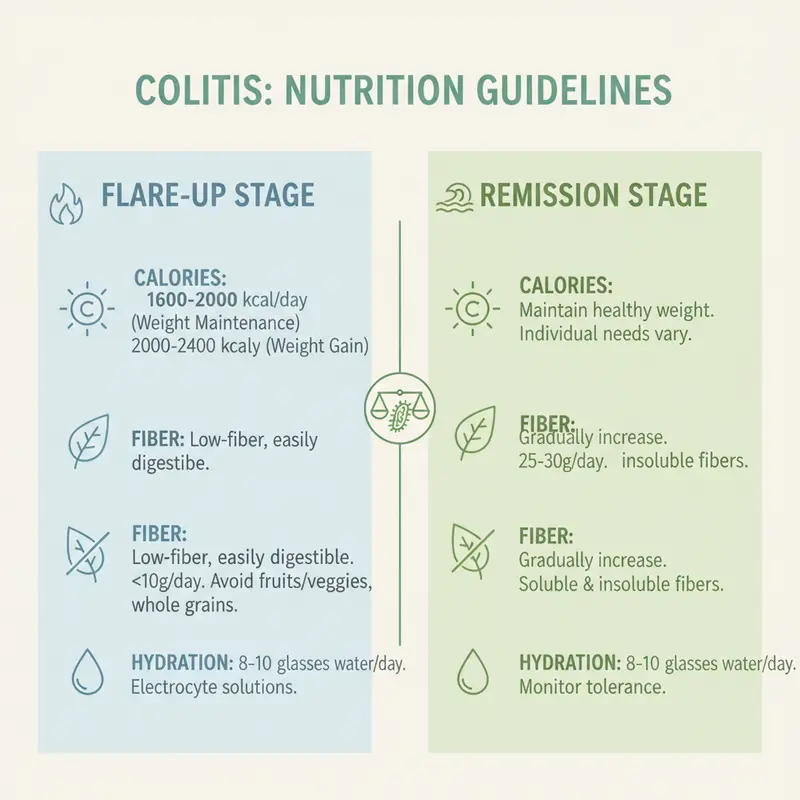
- Flare-ups: Calorie needs may increase to support healing; fiber intake must be low to avoid exacerbation. Boost caloric density with smooth, nutrient-rich, easy-to-digest foods.
- Remission: Fiber intake can gradually increase to meet normal recommendations (~25-30g/day) to aid gut health and regularity, while maintaining balanced calories.
Hydration Importance
Both stages require diligent hydration—especially during flare-ups, where diarrhea leads to increased fluid loss. Electrolyte-rich fluids are beneficial.
Foods Recommended and to Avoid by Colitis Stage
| Colitis Stage | Recommended Foods | Foods to Avoid |
|---|---|---|
| Active Flare | Low-fiber cooked vegetables, lean proteins | High-fiber, spicy, fatty foods |
| Remission | Wide range of fruits, vegetables, whole grains | Excessive alcohol, heavily processed foods |
Use this table to quickly illustrate suitable and unsuitable foods during active flare vs remission periods for colitis patients.
Key Dietary Tips for Managing Colitis at Different Stages
- Focus on low-residue foods during flare-ups
- Increase soluble fiber gradually during remission
- Stay well hydrated to support digestion
These practical diet tips are tailored to colitis stages to help manage symptoms effectively.
Sample Meal Plan for Active and Remission Stages
| Meal Time | Active Stage Example | Remission Stage Example |
|---|---|---|
| Breakfast | Oatmeal with peeled apples | Whole grain toast with avocado |
| Lunch | Boiled chicken with cooked carrots | Grilled salmon with quinoa and steamed broccoli |
This example helps visualize concrete meal ideas for each colitis stage.
Practical Tips for Recipe Modification
- Use cooking methods like boiling, steaming, and pureeing during flare-ups to reduce irritation.
- Substitute high-fiber ingredients with low-residue alternatives for easier digestion.
- Introduce probiotics and prebiotics cautiously, observing individual tolerance.
Summary
Adapting dietary plans to colitis stages—favoring gentle, low-fiber foods during flare-ups and a diversified diet during remission—optimizes symptom control and nutrition. Monitoring individual food tolerance and consulting with healthcare providers is essential for personalized, colitis-friendly recipes that support patient well-being.
FAQ
Q: What is a good dinner for someone with colitis?
A: During flare-ups, opt for low-fiber, bland meals like boiled chicken with cooked carrots or white rice. In remission, you can enjoy more varied dishes such as grilled salmon with quinoa and steamed vegetables.
Q: What’s the best food to eat for colitis?
A: The best foods vary by disease stage; generally, easy-to-digest, low-residue foods during flare-ups and a balanced diet rich in soluble fiber during remission are recommended.
Q: Can you eat scrambled eggs with colitis?
A: Yes, scrambled eggs are generally easy to digest and can be included—especially during remission or mild flare-ups—provided they are prepared without added fats or spices.
Q: What can I put on pasta with colitis?
A: Opt for simple, low-fat sauces such as plain tomato sauce without spices or a small amount of olive oil. Avoid creamy or spicy sauces that may irritate your bowel.