
How Women’s Hormonal Cycles Affect Gut Health and Personalized Diet Plans
Alright, mamas (and everyone else!), let’s talk about something super important that we often overlook: our guts. You know, that feeling when things just feel… off? Turns out, our gut health is a huge piece of the puzzle for overall women’s health, and getting to know our hormonal cycles can be the secret sauce to really fix your gut for good. Our hormones, those little powerhouses that go up and down all month, actually have a big say in how our digestion works, what kind of good bugs are hanging out in our tummies, and even inflammation. That’s why a “one-size-fits-all” diet just doesn’t cut it for us. This article is all about how we can eat smarter, with our cycles in mind, to finally get that lasting gut wellness we’re all craving.
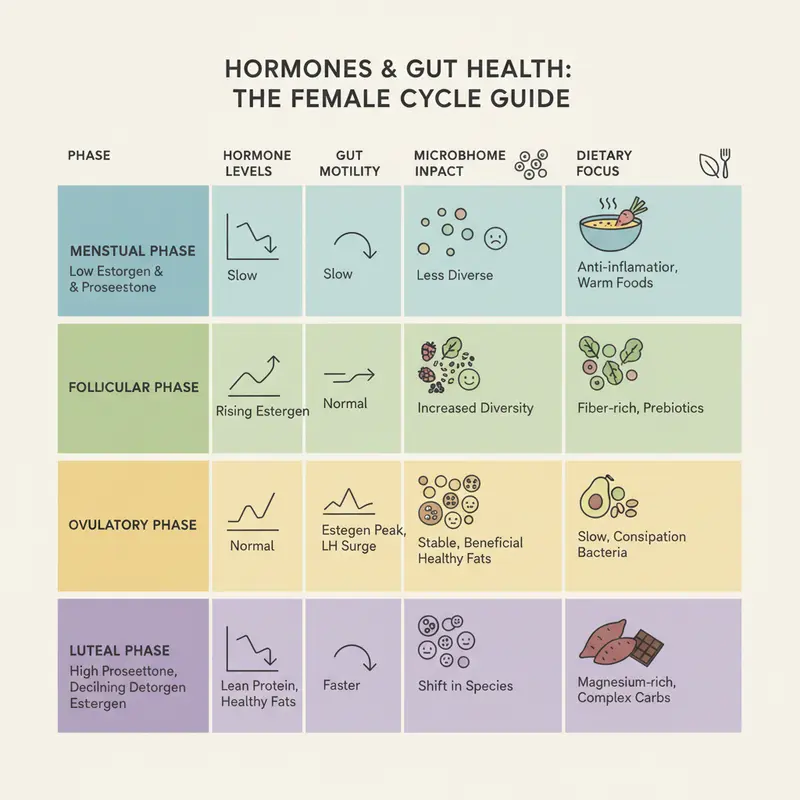
Let’s be real, our monthly cycles are a wild ride, and they totally impact our gut health. Learning to eat in sync with these phases can make a world of difference for our digestive well-being. Estrogen and progesterone are like the DJs of our bodies, spinning different tunes during the menstrual, follicular, ovulatory, and luteal phases. And trust me, our guts are dancing right along with them! This is key to figuring out how to fix your gut for good when it comes to women’s health.
When you’re in your menstrual phase (hello, period!), those estrogen and progesterone levels dip. For me, that often means things slow way down, leading to that lovely feeling of constipation or just general gut grumpiness. This is when I try to load up on comforting, fiber-rich foods and anti-inflammatory goodies like my favorite leafy greens and a handful of juicy berries. They’re like a little hug for my gut, helping it repair and feel less uncomfortable.
Then comes the follicular phase, and suddenly, estrogen starts to rise! It’s like my gut wakes up a bit, feeling more energetic and ready to roll. This is prime time for those good gut bacteria to really thrive. I love reaching for prebiotic foods here, like asparagus (hello, springtime!) and a ripe banana. They’re like fertilizer for your gut garden.
Ovulation is when estrogen peaks, and honestly, I usually feel pretty great around this time – like my body is really on its game! This is when our gut lining is healing, and our gut bugs are in balance. So, I make sure to give them a high-five with probiotic-rich foods like my favorite creamy yogurt or some kefir. It’s like sending in the reinforcements!
Finally, the luteal phase kicks in, and progesterone takes center stage. For me, this is often when my digestion gets sluggish again, and sometimes I feel a bit more inflamed or bloated. This is my cue to reach for magnesium-rich foods, like nuts and seeds, and make sure I’m getting those good omega-3 fatty acids. They help ease those pesky symptoms.
Honestly, just tracking my menstrual cycle has been a game-changer. It helps me tailor my meals to what my body actually needs at different times, which really boosts my gut function and helps me avoid a lot of those common symptoms. For example, I’ve started sketching out a little weekly meal plan that focuses on specific gut-supportive foods for each phase, and it’s truly helped me achieve lasting digestive health improvements.
It’s not just me either! There’s actual science that backs up these hormone-driven changes in our gut bacteria and inflammation. Plus, I’ve seen so many stories of women who’ve found success by eating this way. Experts are even saying this personalized approach is crucial for women’s health, moving us beyond those bland, one-size-fits-all diets. It’s all about helping you fix your gut for good!
Mechanisms, Evaluation, and Management of Chronic Constipation.
Symptoms vary among patients; straining, incomplete evacuation, and a sense of anorectal blockage are just as important as decreased stool frequency.
Overview of Women’s Hormonal Cycle Phases and Corresponding Gut Health Effects
| Cycle Phase | Hormone Levels | Gut Motility Changes | Microbiome Impact | Suggested Dietary Focus |
|---|---|---|---|---|
| Follicular | High estrogen | Improved motility | Increased diversity | High fiber, fermented foods |
| Luteal | Rising progesterone | Slower motility | Decreased diversity | Easily digestible foods, probiotics |
An approach to the diagnosis and management of Rome IV functional disorders of chronic constipation.
If unsuccessful, further therapy is tailored according to subtype.Areas covered: This review covers the definition, epidemiology, diagnostic criteria, investigations and management of the Rome IV disorders of chronic constipation.Expert opinion: By adopting a logical step-wise approach toward the diagnosis of chronic constipation and its individual subtypes, clinicians have the opportunity to tailor therapy accordingly and improve symptoms, quality of life, and patient satisfaction.
Key Factors to Consider in Personalized Gut Health Diets for Women
Okay, so ready to dive in? Here are some simple steps I’ve found super helpful on my journey to better women’s health and a happy gut:
- Tune in to your body: Before you even think about what to eat, figure out where you are in your hormonal cycle. Are you feeling period crampy, energized, or heading into that pre-period slump?
- Fuel up with fiber & prebiotics: During your follicular phase (that post-period, pre-ovulation time), really lean into fiber-rich foods and those great prebiotics. Think of them as food for your good gut bugs!
- Embrace probiotics: When you’re in your luteal phase (post-ovulation, pre-period), make sure to add in those probiotics. They’re like little peacekeepers for your gut when things might be feeling a bit sluggish.
- Be a detective: Pay attention to how you feel! Your body gives you clues. Adjust your food choices based on what makes you feel good (or not so good!).
So, wrapping this up, truly getting to know our hormonal cycles and letting that guide our food choices is such a powerful tool for us women. It’s not about being perfect, but about taking those small steps to fix your gut for good, supporting our unique biology, and just feeling better overall. Trust me, your gut will thank you!
FAQ
Q1: How to restore women’s gut health?
Restoring your gut health as a woman really comes down to tuning into your body! Tracking your hormonal cycle helps you understand what your gut needs during each phase. Then, we can gently adjust our food choices — think fiber, prebiotics, and probiotics tailored to those hormonal shifts — to keep your gut bugs happy and reduce inflammation. It’s all about finding that balance!
Q2: What is the best thing for women’s gut health?
Honestly? Listening to your body! But generally, I’ve found that eating in sync with my hormonal fluctuations is a game-changer for women’s health. That means focusing on anti-inflammatory foods, adding in those good probiotics during the luteal phase, and loading up on fiber-rich prebiotics during the follicular phase. It’s a personalized approach that truly helps fix your gut for good.
Q3: What is the 7 day gut reset?
Oh, the 7-day gut reset! It’s like a mini-vacation for your insides. You basically focus on super clean eating, lots of fiber, plenty of water, and those awesome probiotic foods for about a week. The idea is to hit the “reset” button on your gut bacteria and give your digestion a fresh start. It can be a great kickstart if you’re looking to fix your gut for good, but remember, it’s often just a starting point for longer-term habits!
Q4: What is the fastest way to restore gut health?
Okay, “fastest” is a tricky word, because our bodies are all unique, right? But what I’ve learned is that cutting back on stuff that makes your gut grumpy (think processed foods!), boosting your fiber, drinking plenty of water, and getting those good bacteria in can really help. And for us women, syncing it up with our monthly cycle? That’s like adding rocket fuel to the process for long-term women’s health and helps you fix your gut for good in a sustainable way!
In conclusion, we found that the dietary fibers or probiotics may relieve hard stool, with intervention-specific changes in gut microbiota relevant to constipation relief.