
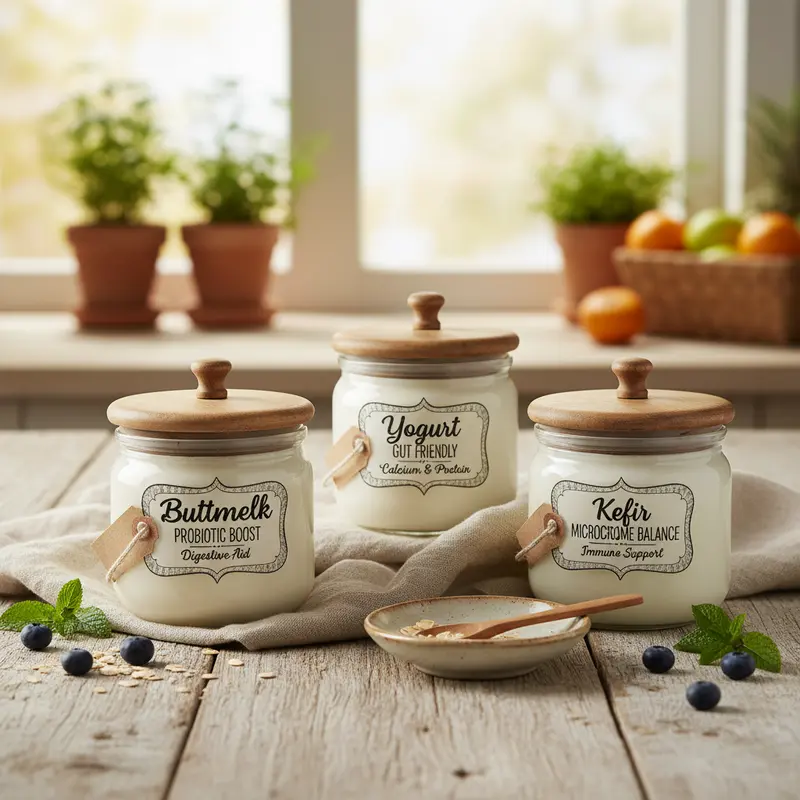
Okay, mamas and papas, let’s be real: trying to keep our families healthy can feel like a full-time job, right? I’m always looking for simple ways to boost our gut health without a total kitchen overhaul. Lately, I’ve been using more buttermilk in my baking—those pancakes are just chef’s kiss! But it got me thinking: is buttermilk a probiotic? Like, does it actually have those amazing beneficial bacteria that everyone talks about for our tummies? I wanted to know if this humble kitchen staple really counts as one of those awesome fermented foods that can make a difference. So, I did a little digging (mostly during naptime, let’s be honest!) to understand if traditional and commercial buttermilk varieties truly deliver on digestive support. Here’s what I found out, complete with my practical tips for choosing the right one!
Understanding Buttermilk: Is It Truly a Probiotic?
First, let’s get on the same page about what a probiotic actually is. The big experts (the World Health Organization, fancy, right?) say they’re “live microorganisms which when administered in adequate amounts confer a health benefit on the host.” Basically, it means these tiny living things need to be alive and kicking, get through our tummies, and actually do something good for us. Makes sense, right?
Here’s where it gets a little tricky with buttermilk. It turns out, not all buttermilk is the same! The way it’s made makes a huge difference in whether it’s truly a probiotic food.
Think about traditional buttermilk. This is the old-school stuff, the liquid left over after churning butter from cultured cream. It ferments slowly and naturally. This process creates a happy little community of beneficial bacteria, like Lactococcus lactis and Leuconostoc. Many of these guys can absolutely act like probiotics. It’s like a wild, diverse garden in there!
Now, most of the buttermilk you find in regular grocery stores is commercial buttermilk. This is made differently. They pasteurize low-fat milk, then add specific bacterial starter cultures. Think of it like a carefully planted garden, but maybe with fewer varieties. These commercial versions often use bacteria like Lactococcus lactis subsp. cremoris. It’s more consistent, but often less diverse in its beneficial bacteria profile compared to its traditional cousin.
So, is buttermilk a probiotic in both cases? Not exactly. Studies show that traditional buttermilk is usually packed with a richer, more varied crew of live bacteria. It often has enough live cultures (over 10^6 CFU/mL, if you want to get technical!) to be truly beneficial. Commercial buttermilk usually starts out strong with live cultures, but those little guys can diminish over time, especially during storage. By the time it hits your fridge, its probiotic potency might be lower.
This is why it’s super important to know the difference between “cultured” buttermilk and the truly traditional kind. Cultured buttermilk is made with the intention of having specific probiotic strains and consistent content. This makes it a stronger contender as a probiotic food than traditional buttermilk, which, while often great, can be a bit of a wildcard depending on how it was made and handled.
Comparison of Probiotic Content in Different Types of Buttermilk
Type of Buttermilk Presence of Live Probiotic Cultures Common Bacteria Strains Health Benefits Traditional Buttermilk Yes Lactococcus lactis, Lactobacillus species Supports digestion and gut health Cultured Buttermilk Yes Lactobacillus acidophilus, Streptococcus thermophilus Aids in gut microbiota balance and lactose digestion
So, here’s the bottom line: don’t just grab any carton of buttermilk and assume it’s a probiotic powerhouse. While traditional buttermilk often has lots of great beneficial bacteria, it’s not always standardized. Commercial cultured buttermilk can absolutely be probiotic, especially if it’s fresh and the label clearly lists probiotic strains. This means we, as consumers, need to be label detectives! Look for those live cultures and check the “best by” date to make sure you’re getting the most digestive support bang for your buck. Buttermilk can be a probiotic food under the right conditions, but it’s not a given for every single bottle.
Key Criteria to Identify a Food as a Probiotic:
- It contains live microorganisms.
- It has proven health benefits.
- It survives passage to the intestines.
- It is consumed in adequate amounts.
Examples of Probiotic Dairy Foods Including Buttermilk:
| Food Item | Probiotic Status | Notable Benefits |
|---|---|---|
| Buttermilk | Potential probiotic, depending on fermentation | Supports digestive health |
| Yogurt | Verified probiotic | Enhances gut microbiome diversity |
| Kefir | Fermented probiotic drink | Improves immunity and digestion |
Conclusion
Whew, that was quite the journey into buttermilk’s secret life, right? So, here’s my takeaway: while buttermilk can be a fantastic source of beneficial bacteria and a great probiotic food for our gut health under the right conditions, it’s not a one-size-fits-all answer. Traditional buttermilk might have a super diverse crew of good bugs, but its quality can vary. On the other hand, fresh, properly labeled cultured buttermilk can offer more consistent probiotic power. My best advice? Be a smart shopper! Look for those “live active cultures” on the label and always check for freshness. Every little bit of digestive support helps, and finding the right buttermilk is just one small, delicious step!
FAQ
Which has more probiotics, buttermilk or yogurt?
Generally, yogurt tends to win out with a higher and more consistent count of proven probiotic strains, especially compared to the commercial buttermilk varieties you find. However, remember that traditional buttermilk can still have a wonderfully diverse group of beneficial bacteria, even if it’s less standardized. It’s a close race!
Is buttermilk a prebiotic or probiotic?
Buttermilk can totally be a probiotic if it’s got those live, beneficial bacteria doing their thing! But it’s not a prebiotic. Think of prebiotics as the food that helps feed our gut bacteria – non-digestible fibers, like the stuff in oats or bananas. Buttermilk provides the bacteria themselves!
Is buttermilk good for your gut health?
Absolutely! If you choose buttermilk with live cultures, it can definitely help support your digestion and keep your gut microbiome happy and balanced. That’s a big win for overall gut health, in my book!
Is buttermilk good for pregnancy?
Yep, buttermilk can be a really healthy and hydrating dairy choice during pregnancy. It offers good nutrients and might even help with digestion, which can be a tricky thing sometimes when you’re expecting! Just be sure to pick pasteurized and fresh products for safety – always a good rule of thumb for expectant mamas!